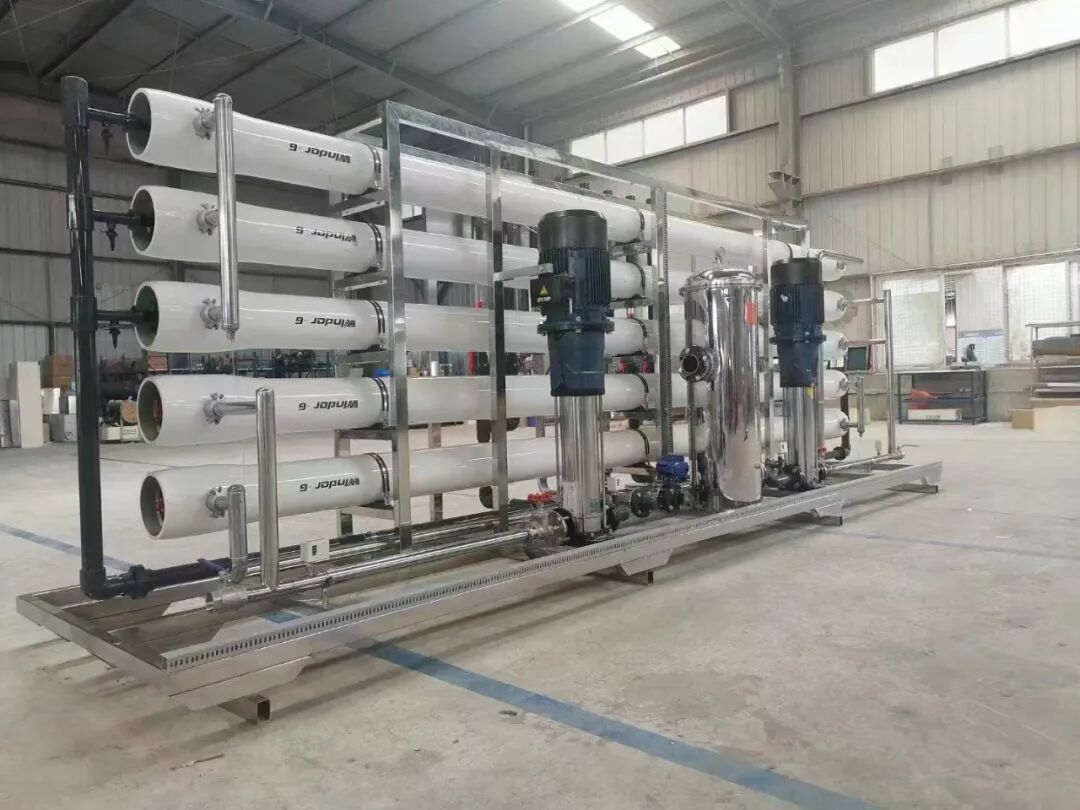
The reverse osmosis membrane is the core of pure water systems. It removes salts and purifies water through its ultra‑microporous structure. However, during long‑term operation, membrane fouling is the main issue that affects membrane service life and product‑water stability.
High pressure difference, reduced product‑water flow and frequent chemical cleaning in many factories are essentially caused by incomplete removal of various contaminants from raw water.
Based on on‑site operation and maintenance experience, we classify RO membrane contaminants into four categories. These are also the key points that need strict control in daily pre‑treatment.
1. Suspended Solids: The most basic and easiest‑to‑treat contaminants
These impurities are commonly found in surface water and wastewater. Their large particles can settle naturally. Normally, they can be fully trapped by multi‑media filtration, sand filtration and flocculation processes. They barely cause direct damage to the membrane surface and are basic issues that can be solved by pre‑treatment.
2. Colloidal Contaminants: Invisible impurities most likely to block membranes
Colloidal particles are extremely fine and stay suspended in water without settling. They mainly include silicates, iron‑aluminum oxides, humus and so on. They build up layer by layer on the membrane surface and form a dense fouling layer to block membrane pores directly. This is one of the major causes for gradual product‑water flow decline year by year.
3. Biological Contaminants: Fast‑spreading and highly destructive
Bacteria, fungi, algae and biological slime fall into this category. A typical feature of biological fouling is forward spreading. At the early stage, pressure drop rises only on the front‑end membranes. Later, microorganisms grow across the whole membrane rack, leading to sharp pressure‑drop increase and severe product‑water loss. Besides, it is difficult to restore performance by cleaning.
4. Organic Contaminants: Hardest to treat and most harmful to membranes
Organic substances in water come from natural humus and industrial wastewater, featuring complex components and random fouling behavior. Organics strongly adsorb inside membrane pores and can hardly be removed by standard cleaning. Some organics even lead to aging and degradation of membrane material. They are the only contaminants that can cause permanent damage to RO membranes. Special pre‑treatment shall be equipped when TOC exceeds the limit.
Final Remarks
In fact, 80% of operational failures of reverse osmosis systems are not caused by defective membranes. Instead, they result from inadequate pre‑treatment and incomplete removal of contaminants. Targeted control over these four types of contaminants can greatly reduce cleaning frequency, extend membrane service life and cut overall operation and maintenance costs.