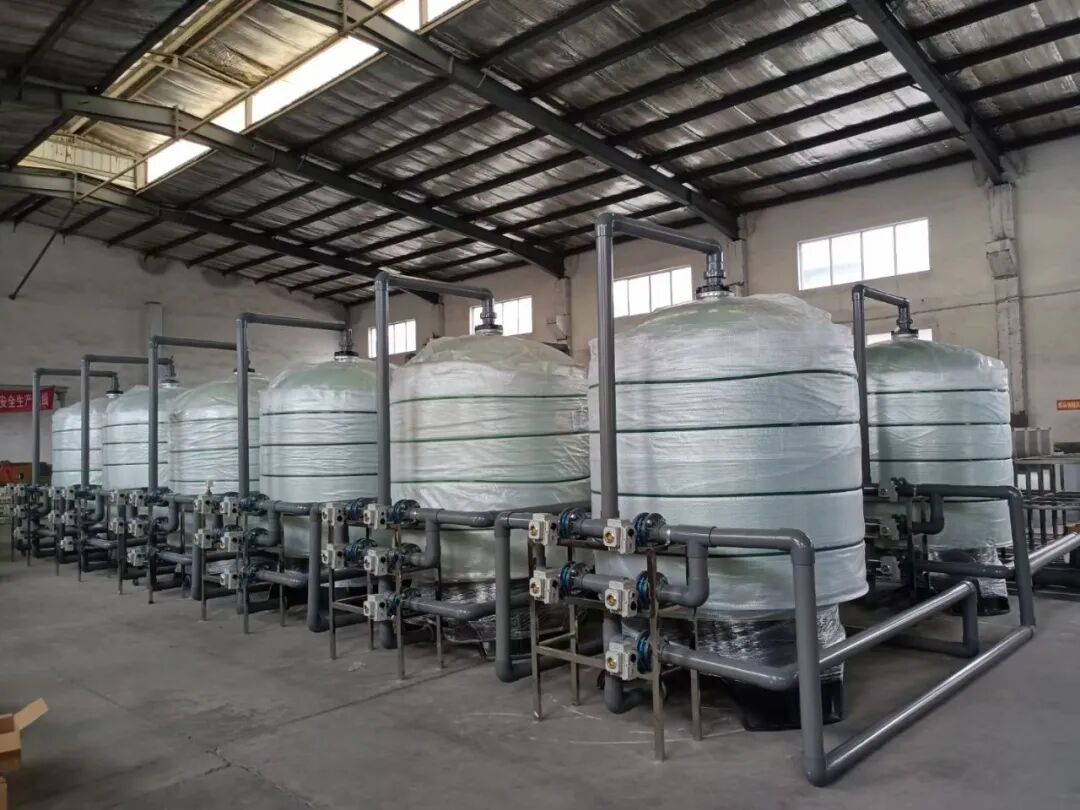
Water softeners are widely used for boilers, central air‑conditioners and other industrial facilities. Excess‑hardness outflow leads to pipe scaling, higher energy consumption and shortened service life of equipment. This article lists main faults and targeted fixes for high‑hardness water to help staff solve poor‑quality‑water problems quickly.
Ⅰ.Fault for New Equipment: Damaged O‑Ring
Applicable situation: Water hardness exceeds standard right after the first‑time setup.
Cause: The central‑pipe end lacks chamfer and lubricant during installation. Forcible insertion breaks the O‑ring at the multi‑port valve joint. Poor sealing lets hard‑water flow into the softened‑water side directly.
Solutions: Replace with a matching O‑ring. Polish pipe ends and apply lubricant before fitting. Carry out tightness check after gentle installation.
Ⅱ.Old‑Unit Fault: Aging and Failed Softening Resin
Applicable situation: Water quality stays unsatisfactory after regeneration when the equipment runs for over two years.
Cause: Long‑term operation breaks and ages resin and clogs its pores. Contaminants and heavy metals destroy its ion‑exchange activity so it cannot absorb calcium and magnesium ions. Low‑grade regeneration salt and seldom‑cleaned tank speed up resin failure.
Solutions: Install brand‑new softening resin. Backwash the tank regularly and use qualified coarse‑grained industrial salt for regeneration.
Ⅲ.Regeneration Fault: Abnormal Salt‑Drawing
Applicable situation: The equipment works normally, yet incomplete regeneration causes intermittent excessive‑hardness water.
Cause:Insufficient inlet water pressure, clogged ejector or salt‑suction pipelines, air leakage in pipes, faulty salt‑suction pump or too‑short salt‑absorbing time set in the program leads to insufficient resin regeneration.
Solutions: Adjust inlet‑water pressure to the standard value; clean ejector and pipelines and inspect salt‑suction parts; check and prolong the regeneration‑program runtime.
Ⅳ. Hidden‑Type Fault: Neglected Daily Maintenance
It is an easily‑overseen frequent‑occurring issue and the main reason for unstable water‑quality results.
Problems of the brine‑salt tank
Shortage of salt or salt‑bridge caused by caked‑up salt leads to regeneration without brine solution. Check the salt level regularly, break hardened salt lumps and use premium‑grade industrial salt.
Insufficient rinsing
Short back‑wash and forward‑wash time leaves impurities trapped inside resin and causes high‑hardness outflow. Extend rinsing time properly and deeply clean the tank regularly.
Quick‑Check Summary
✅High‑hardness water for new‑installed units: Check O‑rings and assembly work.
✅Poor‑quality water for aged equipment: Check resin activity and regeneration system.
✅ Periodic water‑quality fluctuation: Check brine‑salt tank, inlet‑water pressure and rinsing cycles.
Regular inspection and timely replacement of spare‑parts can avoid excess‑hardness outflow fundamentally and ensure stable equipment operation.