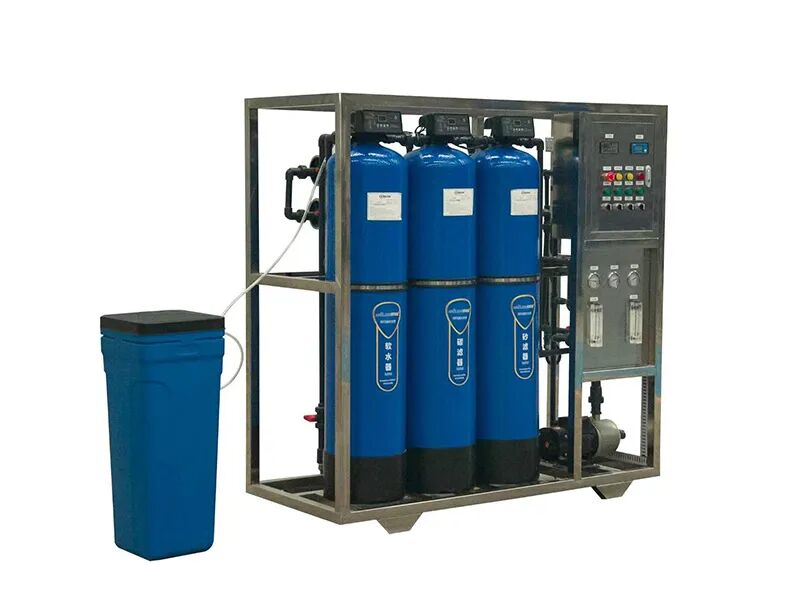
Whether it is direct drinking water equipment for small stores or pure water systems for enterprise production,
many users share the same question:
How many hours should a purified water device operate per day optimally?
The answer is simple. Just like humans,
equipment needs proper work and rest.
Overoperation will only accelerate wear and tear and shorten its service life.
Today we have sorted out a highly practical operation guide for the equipment,
easy to master even for beginners.
Many people believe that "once you buy the equipment,
it should run nonstop all the time". Little do they know,
this mindset is quietly damaging the unit.
The core components of purified water equipment,
such as reverse osmosis membranes and high-pressure pumps,
will suffer overheating and accelerated wear if running continuously for a long time.
This not only affects the water quality, but also causes premature aging of key parts,
raising later maintenance and replacement costs — which is simply not worth the loss.
Therefore, reasonably controlling daily operating hours and doing regular daily maintenance is the key to saving cost and avoiding unnecessary troubles.
Combined with the equipment operating principle and actual application scenarios,
the following three key points are summarized.
Keep these in mind, and your equipment will run stably for much longer:
First, preheating before operation is indispensable; avoid being overanxious for quick results.
When starting the equipment in the morning,
do not put it directly into working mode right after powering on. A 10-minute preheating period is recommended.
This process allows the equipment pipelines,
pump bodies and core components to gradually adapt to the operating state.
It prevents pressure impact caused by sudden startup, reduces component wear,
stabilizes effluent water quality, and avoids substandard water output in the initial stage.
Second, pause the equipment in a timely manner to relieve its "fatigue".
It is normal for the equipment to generate slight heat after running for a period of time,
but such a fatigued operating state must not be prolonged.
It is recommended to stop the equipment for 15 to 20 minutes during the noon low water consumption period.
This can effectively dissipate heat and allow core components such as reverse osmosis membranes to rest.
It also avoids aggravated membrane fouling and performance degradation caused by long-term high-temperature operation.
Third, daily operating hours matter a lot — keep the optimal running time in mind.
Taking equipment wear and water demand into comprehensive consideration,
the optimal daily operating duration for purified water equipment is 8 hours,
with a maximum of no more than 10 hours.
An 8-hour running period can not only meet the water demand of most usage scenarios,
but also allow the equipment sufficient rest time,
balancing operational efficiency and component loss.
If it is necessary to extend the operation to 10 hours occasionally during peak water consumption periods,
make sure to arrange extra rest time afterward, and avoid long-term overload operation.
Besides, it should be reminded that reasonably controlling the operating hours is only part of equipment maintenance.
Daily maintenance also includes regularly checking operating parameters,
cleaning filter elements, and troubleshooting pipeline leakage.
Especially for reverse osmosis membranes,
regular upkeep can effectively extend their service life and reduce operating costs.
In short, the secret to a long service life for purified water equipment lies in **reasonable operation and scientific maintenance**.
Do not keep the equipment running under long-term overload just for temporary convenience.
Follow the optimal daily operating time of 8 hours,
perform proper start-up preheating and mid-operation shutdown rest.
Only in this way can the equipment steadily supply qualified purified water and save you from plenty of subsequent troubles.