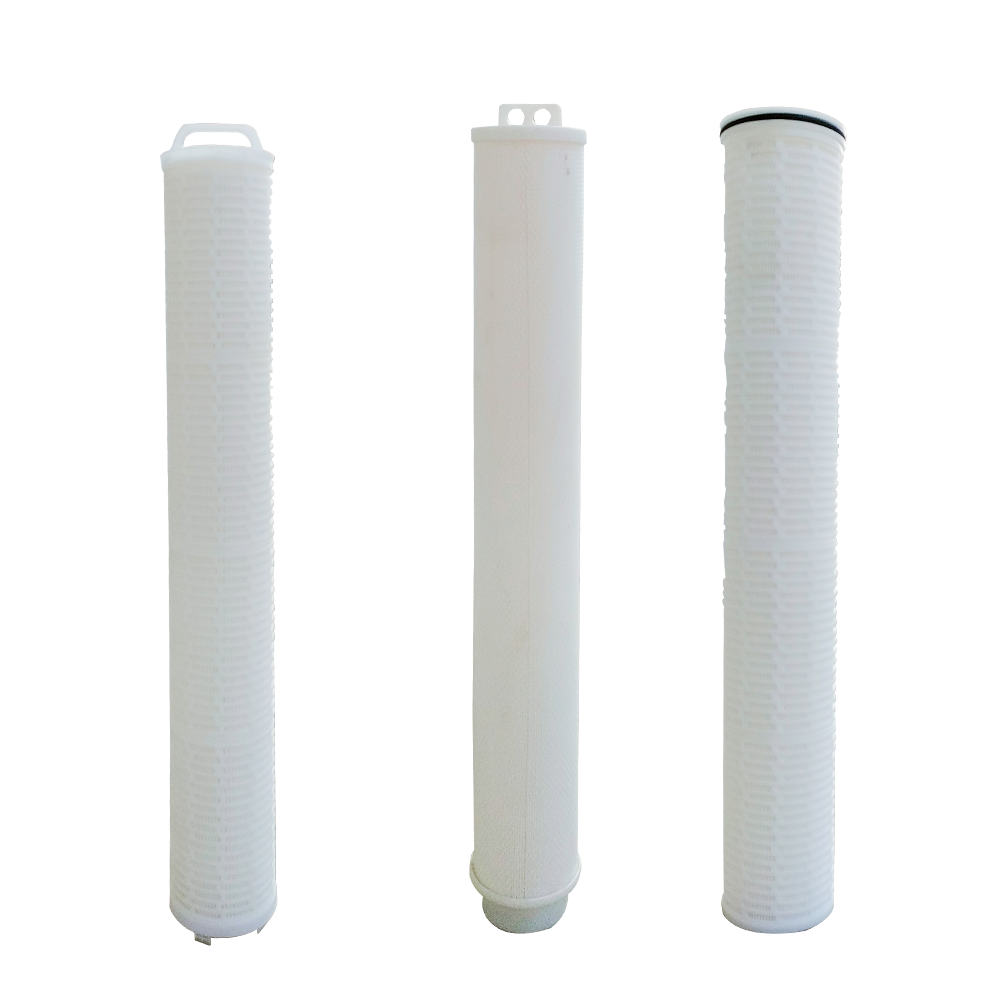
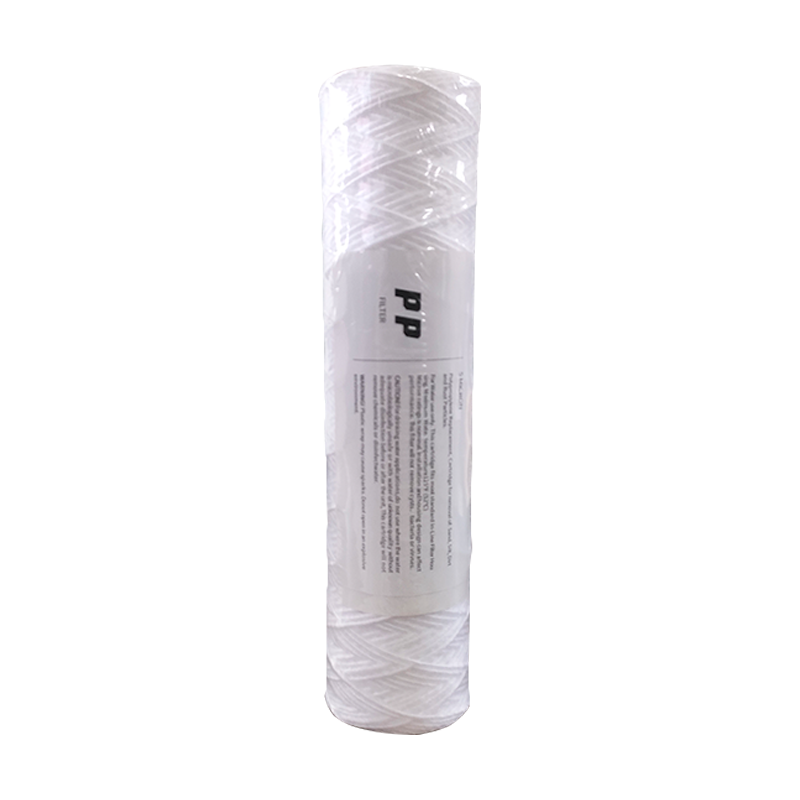
In industrial filtration, water treatment, food processing and other applications, PP string wound filter cartridges are the filter media of choice for many enterprises, thanks to their cost-effectiveness and consistent filtration performance. However, procurement and maintenance personnel often wonder: what exactly is the difference between standard cartridges and Big Blue cartridges? How should they make the selection?
The answer is straightforward: both share the same core material, while their differences lie mainly in physical dimensions and performance focus. The key to the right selection is matching your actual filtration operating conditions. We will break this down thoroughly today to help you avoid pitfalls and cut costs.
First, Understand: Core Advantages of PP String Wound Filter Cartridges (Common to Both Types)
Whether standard or Big Blue cartridges, they are both made of PP (polypropylene) fiber via precision winding technology — this is why they are so widely adopted:
Depth filtration for thorough particle retention: Featuring a honeycomb structure with loose outer layers and dense inner layers, they trap suspended solids, rust and other contaminants in stages. Filtration ratings from 1μm to 100μm are available on demand with consistent performance.
Corrosion resistance & wide compatibility: Acid and alkali resistant, non-toxic and odor-free with no secondary contamination. Suitable for various fluids including water, organic solvents and industrial oils. It can withstand pressure up to 0.5 MPa, delivering low pressure drop and high flow rate.
Cost-effective & easy maintenance: Lower cost than other filter media, high dirt-holding capacity and long service life. Some types can be backwashed for reuse. Simple replacement reduces filter consumption and labor costs.
In short, both deliver the core value of high-efficiency filtration at low cost. The only difference lies in dimensional optimization tailored for different operating conditions.
Selection Guide: 3-Step Accurate Matching to Avoid Pitfalls
Keep these three core principles in mind for proper selection, preventing over-sizing or under-sizing:
Step 1: Check flow rate requirement
✅ Low flow rate (single unit ≤5m³/h): For residential water purification, laboratories, small electroplating equipment, etc. Choose standard cartridges. Compact size, easy installation and better cost efficiency.
✅ High flow rate (single unit ≥5m³/h): For large-scale water treatment, food production lines, steel plant circulating water, etc. Choose Big Blue cartridges for superior filtration efficiency and prevent substandard filtration caused by insufficient flow.
Step 2: Check contaminant loading
✅ Low contaminant level (suspended solids ≤10 mg/L): Pre-filtration for pure water, clean industrial oil filtration. Standard cartridges are fully adequate.
✅ High contaminant level (suspended solids ≥10 mg/L): Wastewater pre-treatment, mine circulating water, chemical feedstock filtration. Prioritize Big Blue cartridges. Their high dirt-holding capacity reduces replacement frequency and cuts downtime losses.
Step 3: Check installation space
✅ Limited space: Select standard cartridges, compatible with conventional filter housings and space-saving.
✅ Sufficient space: If high flow and high contaminant conditions apply, Big Blue cartridges are recommended for easier long-term maintenance.
Common Pitfalls to Avoid: Don’t Make These Two Mistakes!
Myth 1: Big Blue cartridges are always better
👉 Big Blue cartridges come at a higher cost. For low-flow and low-contaminant applications, using Big Blue cartridges is simply over-sizing, which unnecessarily raises procurement costs.
Myth 2: Focus only on price while ignoring filtration rating
👉 Whichever type you pick, it must match your actual rating requirement. (For example, 1–5 μm for pure water in electronics factories, and 10–50 μm for general water treatment.) An excessively fine rating increases pressure drop, while an overly coarse rating leads to substandard filtration.
Summary: Standard and Big Blue cartridges share the same core material but differ in configuration. They have identical core properties, with differences in physical dimensions and performance focus.
- Low flow, low contaminants, limited space → Standard PP string wound filter cartridge
- High flow, high contaminants, ample space → Big Blue PP string wound filter cartridge
Additional reminder: Regularly monitor the cartridge pressure drop (replace promptly once it exceeds 0.2 MPa). Select the core/skeleton material according to fluid properties to extend service life and reduce filtration costs.