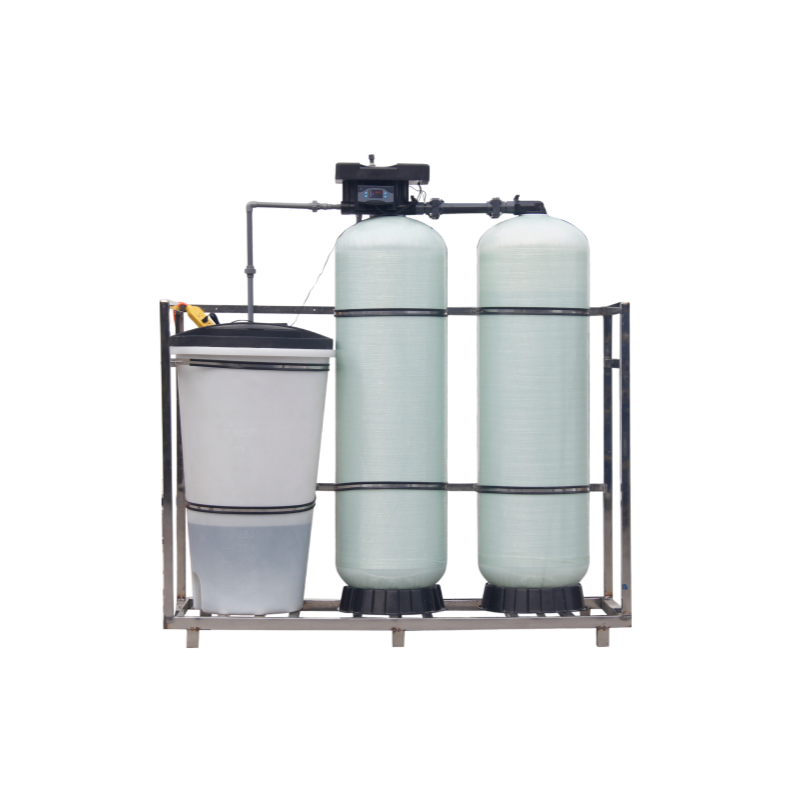
When a water softening equipment is temporarily or long-term out of service,
leaving it unattended will easily cause damage,
and improper operation may lead to faults. By following the correct maintenance methods,
potential problems can be avoided,
and the equipment can directly produce qualified softened water when restarted next time.
I. Long-term Shutdown (Full Protection)
The key is to complete brine protection and resin maintenance, which can be done in 3 simple steps:
1.Shutdown Protection:
Prepare concentrated brine at a level half higher than normal.
Start manual regeneration. After the brine is fully absorbed, close the water inlet,
cut off the power supply, and shut the outlet valve.
This prevents resin dehydration and equipment rusting.
2.Recommissioning: Prepare normal brine.
Open the inlet valve and reconnect the power supply.
After the equipment resets, perform one manual regeneration,
then open the outlet valve for normal operation.
3.Additional Maintenance: If the industrial salt is heavily contaminated,
clean the salt tank once a year and replace the salt well filter cloth at the same time to ensure smooth salt water absorption.
II. Idle for More Than Half a Month (Short-term Lay-up)
Focus on preventing water accumulation and malfunctions.
Keep these 6 key points in mind:
① Raise the wastewater pipeline to the exchange column to drain all residual water in the pipe.
If the water inlet is connected to domestic water, install a backflow preventer.
② Ensure the equipment is fixed and leveled;
arrange the sewage drain pipe close to the sewer inlet to avoid water pooling.
③ Install load-bearing supports for pipelines to prevent force damage and water leakage of the control valve.
④ The drain pipe length shall not exceed 6m. Do not install any valve on it;
the outlet shall not be higher than the final opening of the valve body to avoid siphonage.
⑤ Align the controller position with the plane valve station to avoid startup error alarms.
⑥ Keep the equipment exterior clean and free of water accumulation to prevent shell rusting and circuit moisture damage。
III. Long-term Non-use (All-round Maintenance)
Focus on resin maintenance,
freeze protection and mildew prevention. Follow these 6 key steps:
① Drain all brine from the exchange tank and salt tank.
Apply emulsified oil to all valves to prevent rusting and seizing.
② Run the equipment for 1–2 hours at regular intervals in summer to avoid resin mildew and bacterial growth.
③ Clean the salt tank periodically by opening and flushing the bottom drain valve.
Do not use iodized salt as regenerant; calcium-added salt is recommended.
④ If the resin gets mildewed,
soak it in 1% formaldehyde solution for several hours,
then rinse with clean water until no odor remains.
⑤ Take anti-freezing measures in winter.
Store the resin in salt water, with the concentration adjusted according to temperature — the lower the temperature,
the higher the concentration.
⑥ Ensure stable power and water supply during operation.
Cut off both power and water after shutdown to prevent equipment failure.
Warm Reminder
The service life of the equipment depends on daily maintenance,
especially during the idle period.
Operation in accordance with the above methods can avoid faults and resin damage,
allowing the equipment to be put into direct use at the next startup.