Many factories and laboratories share a common problem. They invest heavily in expensive equipment, adopt sophisticated processes, and maintain strict control over operating procedures. Yet product yield remains low, and test data is often unstable with poor repeatability.
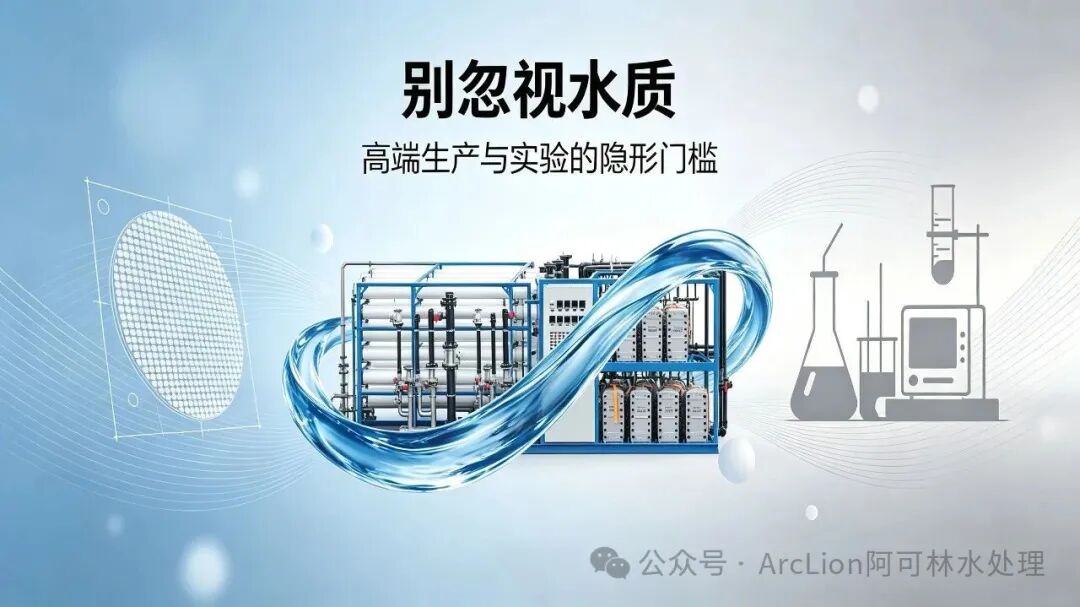
You have checked machines, raw materials and staff operations thoroughly, yet overlooked the most basic but critical variable — feed water quality.
Water that looks clear and clean contains numerous invisible ions, particles, organic matter, heavy metals and bacteria. It may not matter in ordinary scenarios. However, in high-end fields such as semiconductors, biomedicine, new energy and precision experiments, impure water is the root cause of all problems.
Today, let’s talk in plain language about why ultra-pure water is mandatory for high-end industries, how to maintain stable ultra-pure water supply, and daily maintenance tips to avoid common pitfalls.
01 What problems will substandard water quality cause?
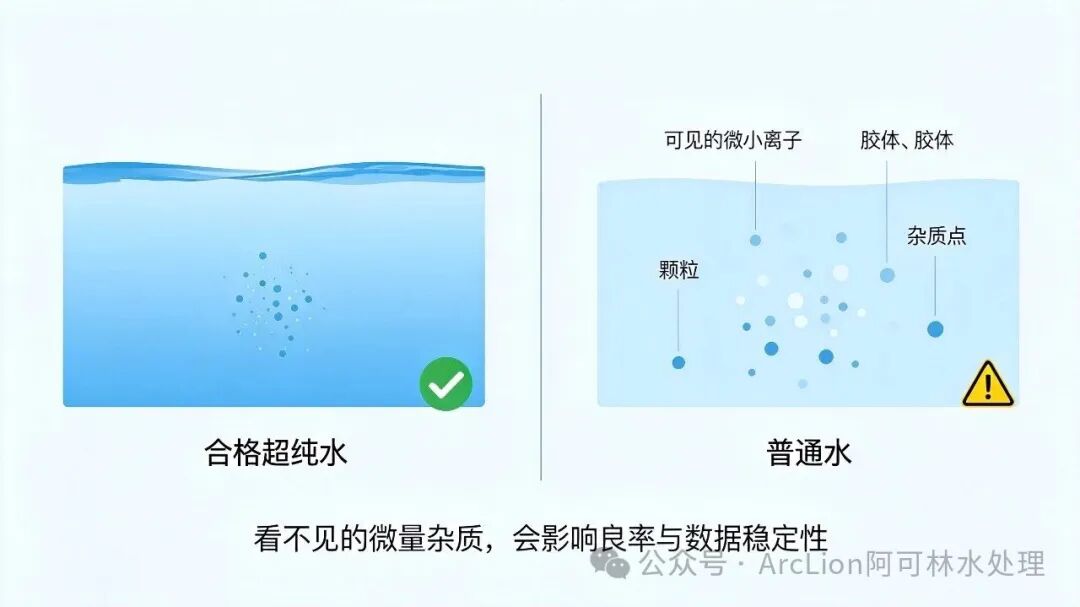
Many people believe “clean-looking water is enough”, and this is the biggest misunderstanding.
Tap water and softened water can only remove large contaminants such as sediment, while trace impurities still remain in the water. When used in precision manufacturing and scientific research experiments, these hidden risks will be greatly amplified.
For production: it easily causes surface defects on products, incomplete cleaning, and inconsistent quality across batches. This leads to mass scrap and high production costs.
For laboratory work: it results in data drift, high blank values, and large deviations between parallel test results. All hard-earned R&D and test data become invalid and cannot be used for reference.
Simply put: the quality ceiling of high-end industries is always limited by the lower limit of water quality. To achieve stable yield and accurate experimental data, ultra-pure water is a necessity, not an optional extra.
02 What are the benefits of ultra-pure water? Understand the four-stage water purification principle.
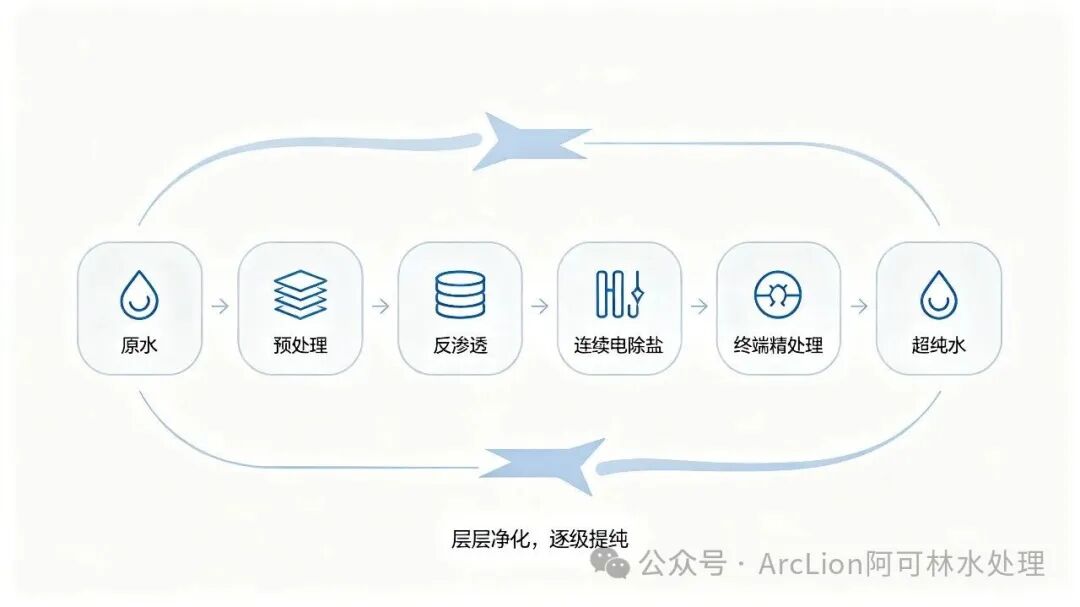
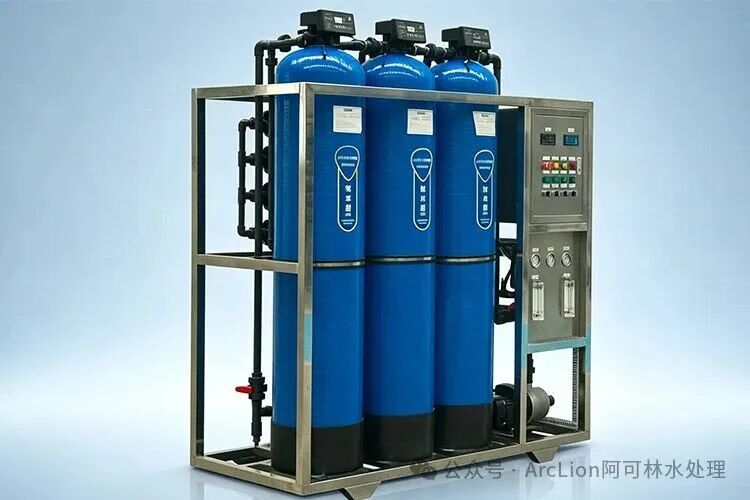
Ultra-pure water can meet the demands of high-end applications mainly because it undergoes successive purification and staged filtration, removing nearly all types of impurities in the water. The mature purification logic widely adopted in the industry consists of four steps. It is easy to understand and delivers outstanding stability.
Step 1: Pre-treatment for source water protection
Before deep purification, raw water is filtered, softened and dechlorinated to intercept suspended solids, colloids, heavy metals and residual chlorine in advance. This step does not directly produce pure water. Its core function is to improve inlet water quality, protect the precision water purification components downstream, prevent contamination and wear of core equipment, and reduce failure risks and maintenance costs from the source.
Step 2: Reverse osmosis purification to lay a solid foundation for pure water
High-precision membrane separation technology is used to remove most salts, organic matter, bacteria and fine particles from water in large quantities. Ordinary raw water is turned into high-purity primary pure water, which forms a solid water quality base and removes the vast majority of contaminants.
Step 3: Continuous electrodeionization for deep fine impurity removal
It abandons the old process requiring regeneration with acid and alkali chemicals, and adopts fully automatic continuous deionization technology to continuously remove trace ions remaining in water. No chemical agents are needed in the whole process and no secondary pollution will be generated. It can produce water stably 24 hours a day, perfectly matching the water demand for continuous industrial production and round-the-clock laboratory tests.
Step 4: Terminal polishing to meet top-grade water standards
This is the final step for ultra-pure water production. It carries out extreme deep purification on the pre-treated water to offset minor water quality fluctuations during equipment operation. The treated water can stably reach electronic-grade and research-grade ultra-pure water standards, suitable for all kinds of demanding high-end water use scenarios.
03 Fully Automatic Intelligent Operation, Reliable and Hassle-free
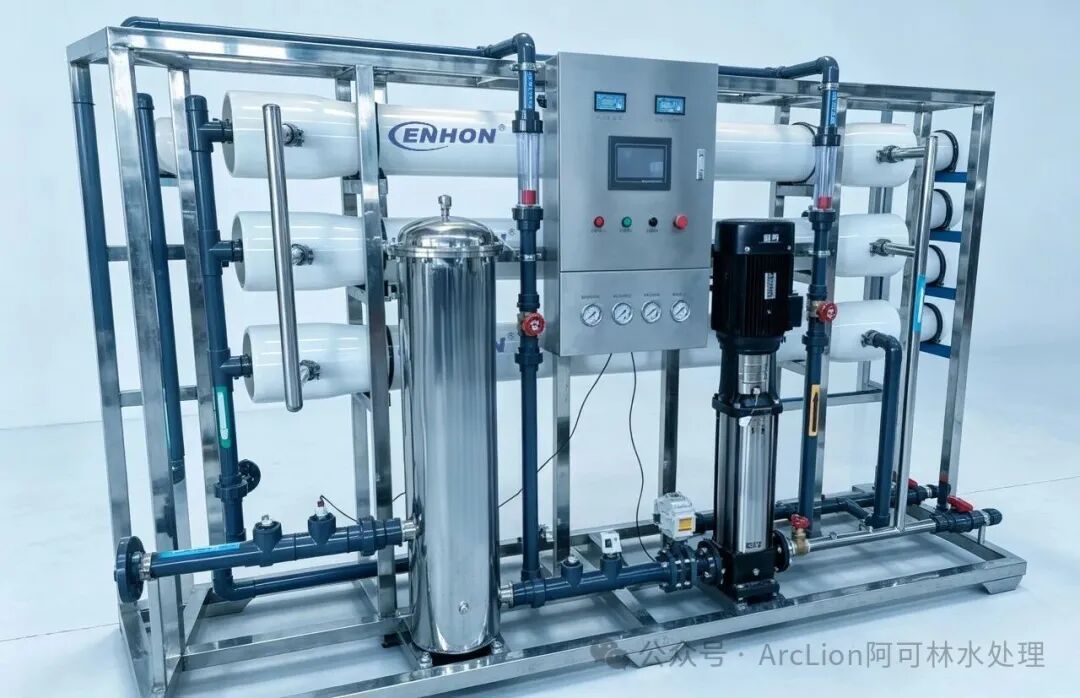
A reliable ultra-pure water system never relies on constant manual supervision.
Modern water purification equipment is equipped with an intelligent control system to realize visual monitoring of the whole process. Core data such as water quality and pipeline pressure, from raw water inflow to terminal water output, can be checked online in real time and traced throughout the operation.
It also comes with intelligent protection mechanisms: automatic start and stop for low/high water level, automatic fault alarm, and free switching between manual and automatic modes. There is no need for on-site staff 24/7. This not only cuts labor costs, but also detects abnormal water quality and equipment risks at the earliest stage, preventing production or laboratory downtime caused by equipment failures.
04 These Industrial Scenarios All Rely on Ultra-Pure Water
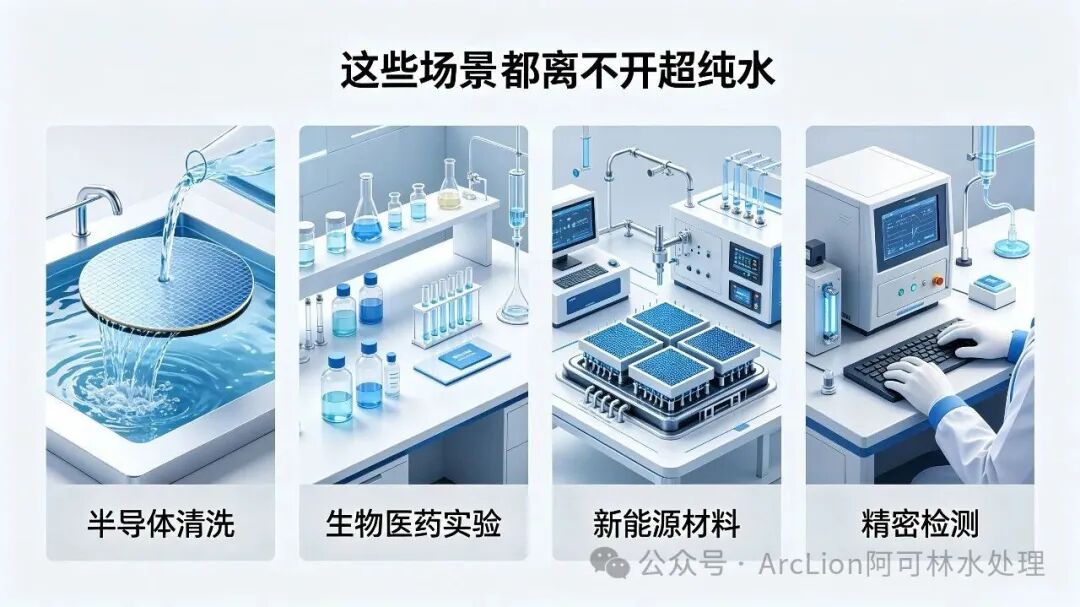
Ultra-pure water is an essential foundation for precision manufacturing, high-precision testing and scientific R&D:
Electronics & Semiconductor Industry:
For cleaning chips, PCB circuit boards and precision components. It avoids etching defects and low yield caused by impurities in water.
Biomedical Industry:
Water for pharmaceutical preparations, medical reagents and biological culture experiments. It effectively prevents reagent deterioration and insufficient purity due to water contamination.
Scientific Research & Testing Institutes: For physical and chemical analysis and precision experiments in university labs and third-party testing centers. It ensures accurate, repeatable and comparable data.
New Energy Industry:Used in the production and cleaning of lithium batteries, photovoltaic modules and new energy materials. It prevents product performance defects from residual trace ions.
Precision Manufacturing & Surface Treatment Applied in optical instruments, high-grade raw material preparation, electroplating and coating. It guarantees product surface cleanliness and stable production processes.
05 Unstable Water Quality & Frequent Equipment Failures? The Root Lies in Maintenance
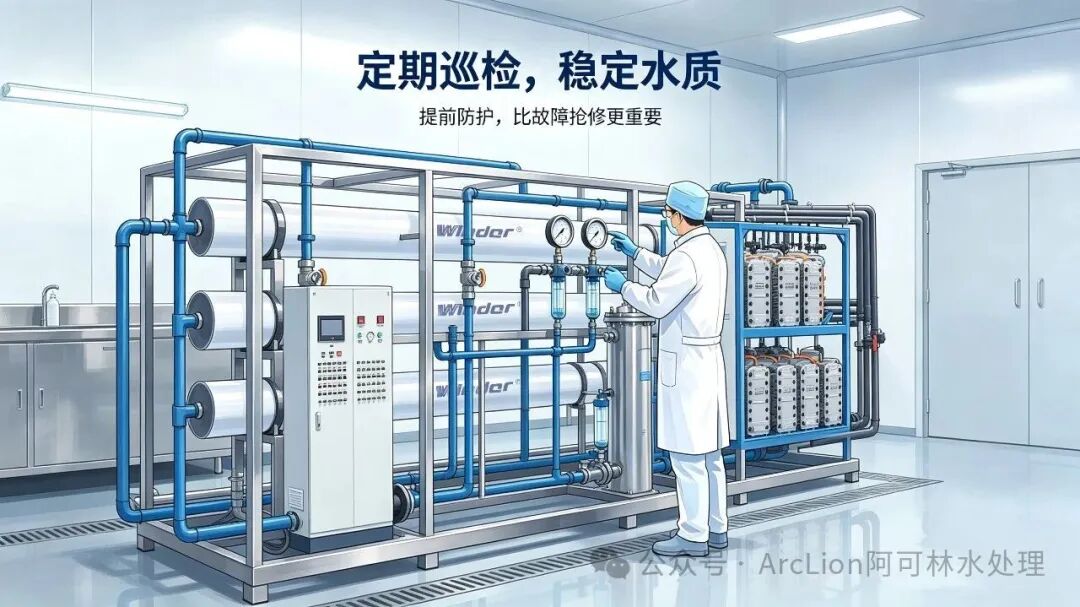
Many enterprises adopt high-end pure water systems, yet still suffer from fluctuating water quality, frequent equipment failures and rapid consumption of consumables. It is not a flaw in the equipment technology, but inadequate daily maintenance.
Ultra-pure water systems are precision water treatment equipment. Their core purification components are highly sensitive to water quality, so periodic maintenance must be followed:
Daily routine inspection:
Simply check water quality data and pipeline pressure. Examine pump operation, pipe leakage and equipment alarm status to resolve minor risks promptly.
Weekly regular maintenance:Inspect filter cartridge performance, replenish water treatment chemicals, flush pipelines and verify valve status to stabilize inlet water conditions.
Monthly special maintenance:
Calibrate water quality meters to guarantee accurate readings. Check operating parameters of core modules, clean pre-treatment assemblies and fasten pipe fittings.
Quarterly / semi-annual deep maintenance:
Maintain and clean membrane elements and precision deionization modules. Assess the service life of consumables, prepare for replacement in advance, and verify the safety protection functions of the system.
Annual comprehensive overhaul:
Check aging parts across the whole system, adjust equipment performance, and test final outlet water quality to restore the equipment to its optimal operating condition.
06 The Core Truth of Maintenance: Prevention Beats Emergency Repair
Ultra-pure water equipment must never operate with faults or wait until water quality goes out of standard before repair.
Once the front-end pre-treatment fails, impurities will directly impact the expensive precision purification modules downstream and cause irreversible damage. This not only leads to rapid deterioration of water quality, but also greatly raises costs for equipment repair and consumable replacement, and seriously delays production and laboratory schedules.
Regular inspections, proactive maintenance and predicted replacement are the best solution to maintain long-term stable water quality, extend equipment service life and cut overall costs.
Closing Remarks
For high-end manufacturing and scientific testing industries, ultra-pure water systems are never optional auxiliary equipment. Instead, they serve as core infrastructure to guarantee quality, stable production capacity and accurate data.
Stable and pure water supply helps avoid product scrap, data deviation, inconsistent batches and other problems from the source. It becomes the hidden strength for enterprises to improve quality, cut costs and for laboratories to achieve precise and efficient research.
We offer professional consultation for customized ultra-pure water solutions tailored to your scenarios, upgrading of old pure water systems, and full-cycle equipment maintenance outsourcing. We can match suitable water treatment solutions according to your requirements.