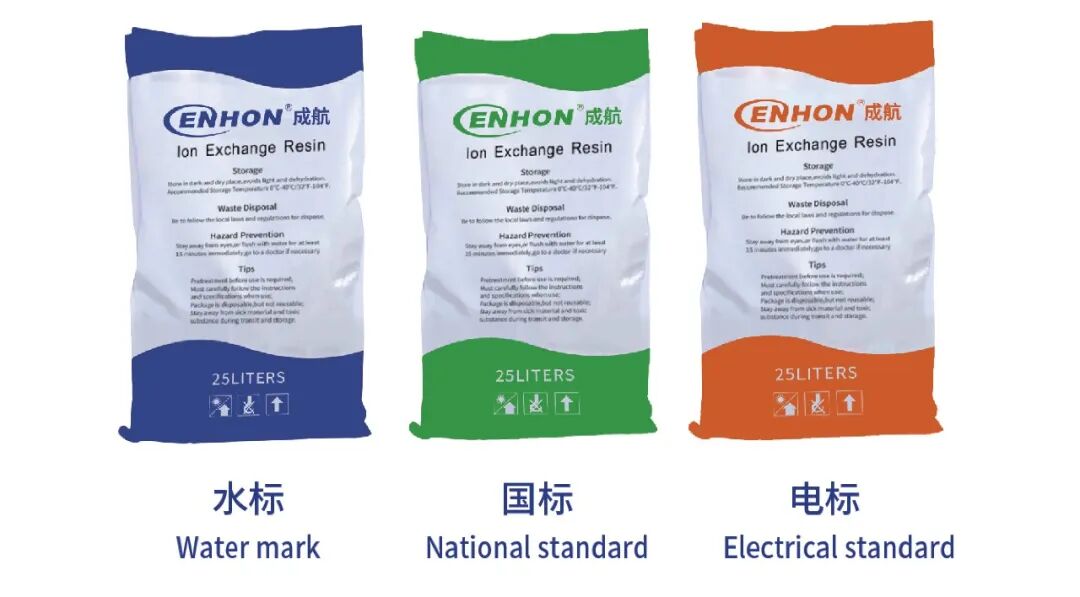
Ion exchange resin serves as the core filter medium of water softening equipment for residential water purification, industrial water treatment and boiler water supply scenarios, directly determining the softening performance of water quality and operational stability of equipment. This article elaborates on the working principle, service life, matching selection, failure judgment and professional maintenance knowledge of water softener resin, helping users fully grasp key operational points for resin application.
1. Core Working Principle of Water Softener Resin
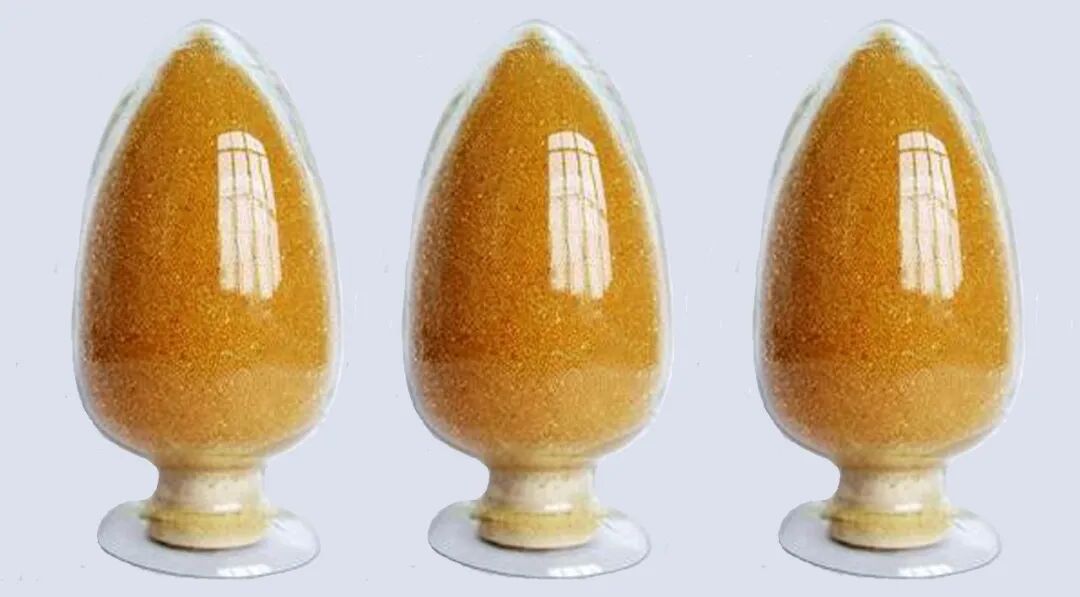
Ion exchange resin is a synthetic, porous and insoluble filter medium for water treatment, as well as the core consumable of water softening systems. Sodium ions are attached to the surface of resin beads, which can undergo replacement reactions with calcium and magnesium ions—the main culprits of limescale—in water, thereby softening hard water.
Calcium and magnesium ions are the primary cause of limescale formation. After ion exchange by resin, calcium and magnesium ions in water are replaced by sodium ions. Sodium ions cannot adhere to the surfaces of pipelines and equipment to form scale, eliminating risks of scaling and corrosion, and fundamentally resolving the scaling trouble caused by hard water.
During system operation, the resin continuously adsorbs calcium and magnesium ions from water. Once saturated, it loses its softening capacity and requires brine regeneration to restore performance for cyclic reuse. Nevertheless, repeated cycles of exchange and regeneration over time lead to resin aging and wear, which is a normal degradation process for this consumable material.
2. Standard Service Life of Ion Exchange Resin
The service life of resin mainly depends on resin quality and raw water hardness. Clear replacement cycle references are available under normal operating conditions:
Ordinary domestic resin: Approximately 1 year of service life under regular water quality conditions; annual replacement is recommended.
High-quality imported resin: Features superior stability and wear resistance, with a service life ranging from 1.5 to 2 years.
If the raw water has excessively high hardness, the resin will operate under long-term overload and age faster. Shorten the replacement cycle according to actual water quality to ensure softened water meets standard requirements.
3. Judgment Methods for Resin Failure
No professional testing instruments are needed. You can quickly identify resin failure by checking the outlet water quality and equipment operating conditions. After ruling out equipment faults, insufficient salt in the salt tank, abnormal regeneration and other troubles, if the hardness of outlet water stays steadily above 3 PPM and water production volume drops obviously, the resin is confirmed to be aged, saturated and ineffective, and shall be replaced in a timely manner.
4. Common Types of Ion Exchange Resin and Their Applicable Scenarios
Water treatment resins come in various grades categorized by pore size, acid-base property and material characteristics to fit diverse water treatment applications. Below are the precise applications of 20 commonly used resin models.
001×7 (732) Strong Acid Styrene Cation Exchange Resin
Primarily applied for hard water softening, desalinated water, pure water and ultra-pure water production. It is also suitable for hydrometallurgy, rare element separation, antibiotic extraction and other industrial processes, serving as the most widely used basic resin for domestic water softeners.
201×7 (717) Strong Base Styrene Anion Exchange Resin
Mainly used for pure water and ultra-pure water preparation; also applicable to wastewater treatment and biochemical product extraction processes.
001×4 (734) Strong Acid Styrene Cation Exchange Resin
Specially tailored for ultra-pure water production, and also used for antibiotic refining.
201×4 (711) Type I Strong Base Styrene Anion Exchange Resin
Widely adopted in pure water production, radioactive element extraction, sugar solution decolorization, fine chemical product manufacturing and other fields.
D001 Macroporous Strong Acid Styrene Cation Exchange Resin
Suitable for condensate treatment in high-speed mixed beds, ultra-pure water and secondary desalination. Tolerant to water with high organic content; can also act as a catalyst for organic reactions.
D201 Macroporous Strong Base Styrene Anion Exchange Resin
Mainly utilized for condensate treatment in high-speed mixed beds, industrial wastewater treatment, and heavy metal recovery & purification.
D113 Macroporous Weak Acid Polyacrylic Cation Exchange Resin
Core function: remove alkaline salts such as bicarbonates and carbonates in water. When matched with 001×7 (732) resin, it efficiently eliminates water alkalinity and hardness, ideal for softening complex-quality raw water.
D202 Macroporous Type II Strong Base Styrene Anion Exchange Resin
Applicable for pure and ultra-pure water production with excellent adaptability to high-salinity feed water; also used for biochemical substance extraction and sugar decolorization.
D301 Macroporous Weak Base Styrene Anion Exchange Resin
Commonly used in industrial scenarios including ultra-pure water preparation and chromium-containing electroplating wastewater treatment.
002×7 Extra Strong Acid Styrene Cation Exchange Resin
Designed for small boiler softening systems below 10 tons/hour; also fits hydrometallurgy, rare element separation and antibiotic extraction.
001×10 (002SC) Strong Acid Styrene Cation Exchange Resin
Mostly paired with weak acid resins for pure water production in double-layer bed water treatment equipment.
001×8IR Extra Uniform Pore Dual Polystyrene Cation Resin
Suitable for domestic & industrial water softening and pure water production; also used to extract biochemicals like lysine and glutamic acid.
D002 Catalyst Resin (Dry Hydrogen Resin)
Macroporous strong acid styrene cation resin, exclusively for the etherification reaction of methanol and isobutylene to synthesize MTBE in chemical processes.
D254 (D204) Macroporous Strong Base Quaternary Ammonium Anion Exchange Resin
Anion resin primarily used for pharmaceutical purification and heparin sodium extraction.
D-61 Macroporous Strong Acid Styrene Cation Exchange Resin
Mainly for ultra-pure water treatment. Matched with D-92 resin for circulating water treatment in ethylene glycol and methyl ethyl ketone production lines.
D-62 Macroporous Strong Acid Styrene Cation Exchange Resin
Customized for food fermentation industries (vitamin C production, monosodium glutamate manufacturing) to boost conversion rates; also applicable to pure water treatment.
D-85 Macroporous Polyacrylic Weak Acid Cation Exchange Resin
Predominantly for separation and purification of various biochemical products.
D301-G Macroporous Weak Base Styrene Anion Exchange Resin
Widely deployed in medical, food and sugar industries for water dealkalization and deacidification.
D311 Macroporous Polyacrylic Weak Base Anion Exchange Resin
Fit for food and pharmaceutical sectors, used in biochemical drug extraction, sugar decolorization and drug decolorization & refining.
D318 Macroporous Polyacrylic Weak Base Anion Exchange Resin
Weak base anion resin for extraction and decolorization of biochemical products such as citric acid and vitamin C.
5. Professional Maintenance Specifications for Ion Exchange Resin
The service life and performance of resin depend not only on product quality, but standardized storage, pretreatment and routine maintenance also play a decisive role. Detailed maintenance rules are as follows:
Moisture Protection during Storage and Transportation
Resin shall be kept moist all the time. Air drying and dehydration will cause cracking and damage. If the resin is dehydrated, never soak it directly in clean water. Reactivate it by soaking in 10% concentrated brine first, then dilute the salt concentration gradually to prevent rupture caused by rapid expansion of resin beads.
Constant Temperature Storage Management
The suitable storage temperature for resin ranges from 5℃ to 40℃. Keep it away from high-temperature sunlight exposure and freezing damage. If constant temperature cannot be maintained in winter, immerse the resin in brine of proper concentration for antifreeze protection.
Strict Prevention against Contamination and Deterioration
During operation, isolate resin from contaminants such as oil stains, metal impurities, microorganisms and strong oxidants. These pollutants will block resin pores and weaken exchange capacity; in severe cases, the resin will be completely scrapped.
Pretreatment Process for New Resin
Pretreatment is mandatory before the first use of new resin:
Soak in clean water until fully swollen;
Remove inorganic impurities with 4%–5% dilute hydrochloric acid;
Clean organic impurities with 2%–4% sodium hydroxide solution;
Rinse repeatedly until the wastewater is nearly neutral.
For medical and food-grade applications, extra disinfection by ethanol soaking is required.
6. Summary
Ion exchange resin acts as the core consumable of water softening equipment and directly governs the quality of treated water. During daily operation, the replacement cycle can be predicted based on raw water quality, and resin failure status can be identified via outlet water hardness and water production capacity. In addition, standardized storage, maintenance and pretreatment protocols must be strictly followed. This practice not only guarantees compliant water quality, but also prolongs resin service life and reduces equipment operating costs.