I. Classification of Pretreatment, Pre-desalination and Deep Desalination Equipment
1.What pretreatment equipment do you know?
Answer: Pretreatment equipment includes mechanical filters, high-efficiency fiber filters, activated carbon filters, precision filters, ultrafiltration systems, microfiltration systems, sodium ion softeners, iron and manganese removal filters, chemical dosing units, raw water tanks and aeration tanks.
2.What pre-desalination equipment do you know?
Answer: Pre-desalination equipment consists of electrodialysis units and reverse osmosis systems.
3.What deep desalination equipment do you know?
Answer: Deep desalination equipment includes anion exchangers, cation exchangers, mixed bed ion exchangers, distillation units and EDI systems.
II. Detailed Explanation of Equipment Selection, Working Principles and Operation & Maintenance
4.How to select a mechanical filter? What is its working principle?
Answer:
Equipment Selection
The tank size and combination mode of mechanical filters are determined based on the total inflow of the system. Multiple units can be operated in parallel if the single-unit capacity is insufficient, with standby units equipped as backup. The total inflow is calculated according to the permeate flow and water recovery rate of the reverse osmosis system.
Multi-grade refined quartz sand with different particle sizes is adopted as filter media, filled in layers from coarse to fine to form a standard graded filter bed.
Filtration Working Principle
The filtration performance is mediocre at the initial water feeding stage, mainly because a "bridging layer" has not formed on the filter bed.
Bridging means suspended solids in raw water form an interception screen on the surface of filter media: large impurities are trapped first, followed by fine suspended solids, forming an inverse-gradient filter bed. Filtration accuracy improves significantly once the bridging layer is fully formed.
As the equipment runs continuously, intercepted impurities accumulate in the filter bed and the pressure difference between inlet and outlet rises steadily. Backwashing shall be initiated when the pressure difference reaches 1 kg/cm².
Tanks with diameter less than 2500 mm: water-only backwashing is acceptable;
Tanks with diameter over 2500 mm: compressed air scouring is mandatory to thoroughly clean the filter media.
Standard backwash flow rate is 3~4 times the rated flow of the filter. The target bed expansion rate during backwashing is controlled at 15%~25%. The air scouring intensity ranges from 10 to 18 L/S·m². A Roots blower can be installed to supply air if no air source is available on site.
Drawbacks of Traditional Models
Traditional filters adopt cobblestone bedding plus convex perforated steel plates for water distribution, resulting in poor water distribution uniformity. The flow velocity at the tank center is far higher than that near the tank wall.
During backwashing, quartz sand is prone to layer mixing, and fine sand may leak into downstream precision filters and RO membrane elements, causing blockage and irreversible damage to membrane components.
Advantages of Improved Structure
New-type filters adopt perforated plates fitted with ABS two-way water distributors. The distributors feature low flow resistance during normal operation and greatly enlarged flow passage during backwashing, delivering uniform water distribution and complete backwashing for stable effluent quality.
The gap of water distributors is only 0.1~0.2 mm to prevent fine sand leakage.
Installation Notes
Fill the tank with water before loading quartz sand to avoid distributors being cracked by falling sand;
Operators shall not enter the tank with hard-soled shoes to prevent cracking ABS distributors;
Limit butterfly valves are equipped to precisely regulate backwash flow.
5.How to select a precision filter? What types of filter cartridges are commonly used?
Answer:
The tank diameter of a precision filter is matched according to the total system inflow. For standard 40-inch cartridges with 5 μm filtration accuracy, the rated flow per cartridge is approximately 2 m³/h.
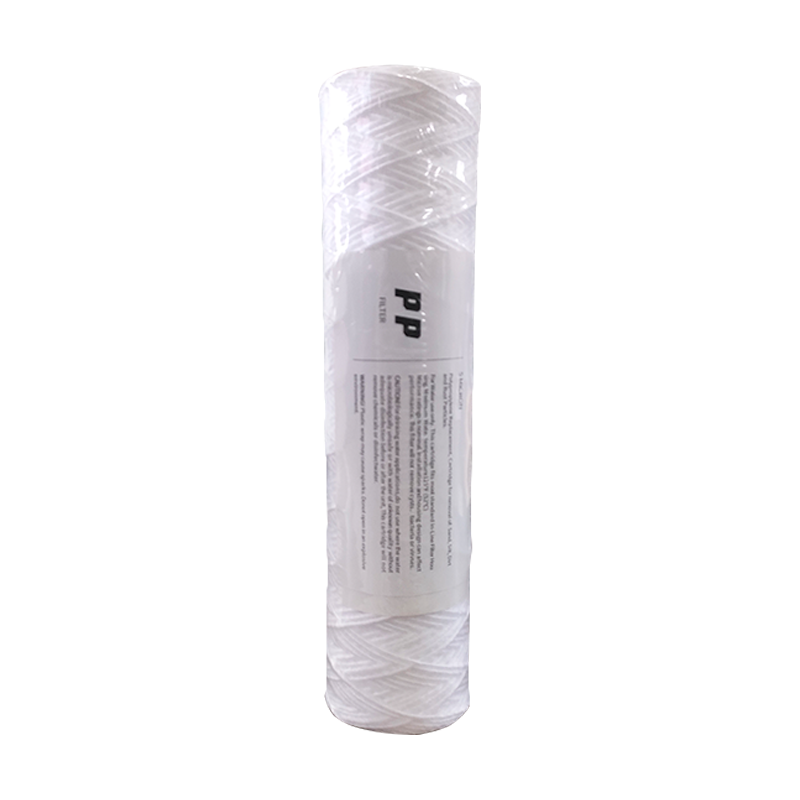
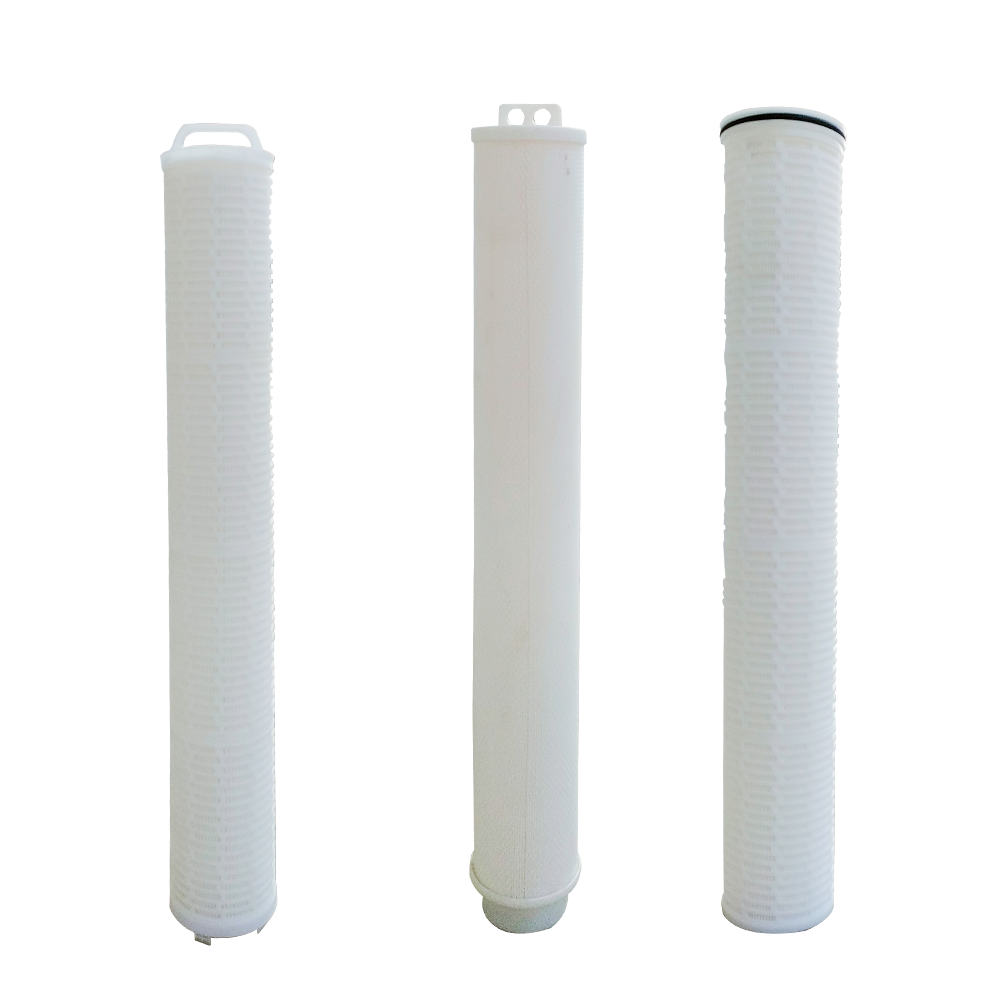
Common cartridge types: polypropylene melt-blown cartridges, wound filter cartridges, pleated filter cartridges.
6.How to remove iron from raw water?
Answer:
Iron in groundwater mostly exists in the form of divalent ferrous ions, which are soluble in water and cannot be directly filtered out. Raw water shall be fully aerated to oxygenate and oxidize soluble ferrous ions into insoluble trivalent iron precipitates. The water then flows into an iron & manganese removal filter to intercept iron sludge.
If raw water mainly contains trivalent iron, aeration is unnecessary, and the water can be fed directly into the iron & manganese removal filter for iron removal.
7.Why is a decarbonator installed after the cation exchanger?
Answer:
Metal cations in raw water exchange with H⁺ on cation resin, turning the effluent acidic. Bicarbonate ions (HCO₃⁻) in water are converted into carbonic acid (H₂CO₃), which further decomposes into carbon dioxide (CO₂).
CO₂ has low solubility and can be easily stripped. Without a decarbonator, CO₂ will enter the anion exchanger in the form of carbonic acid, consuming the exchange capacity of anion resin, increasing the load on the anion bed, shortening the resin service cycle per regeneration, and raising the consumption of regenerant chemicals.
Standard installation position: between cation exchanger and anion exchanger. Decarbonators are also equipped for some pre-RO processes, and the configuration depends on on-site raw water quality parameters.
8.What are the common anti-corrosion treatment methods?
Answer:
Main anti-corrosion processes for tanks and pipelines: rubber lining, epoxy coating, plastic lining, enamel coating.
9.What core components make up a reverse osmosis system?
Answer:
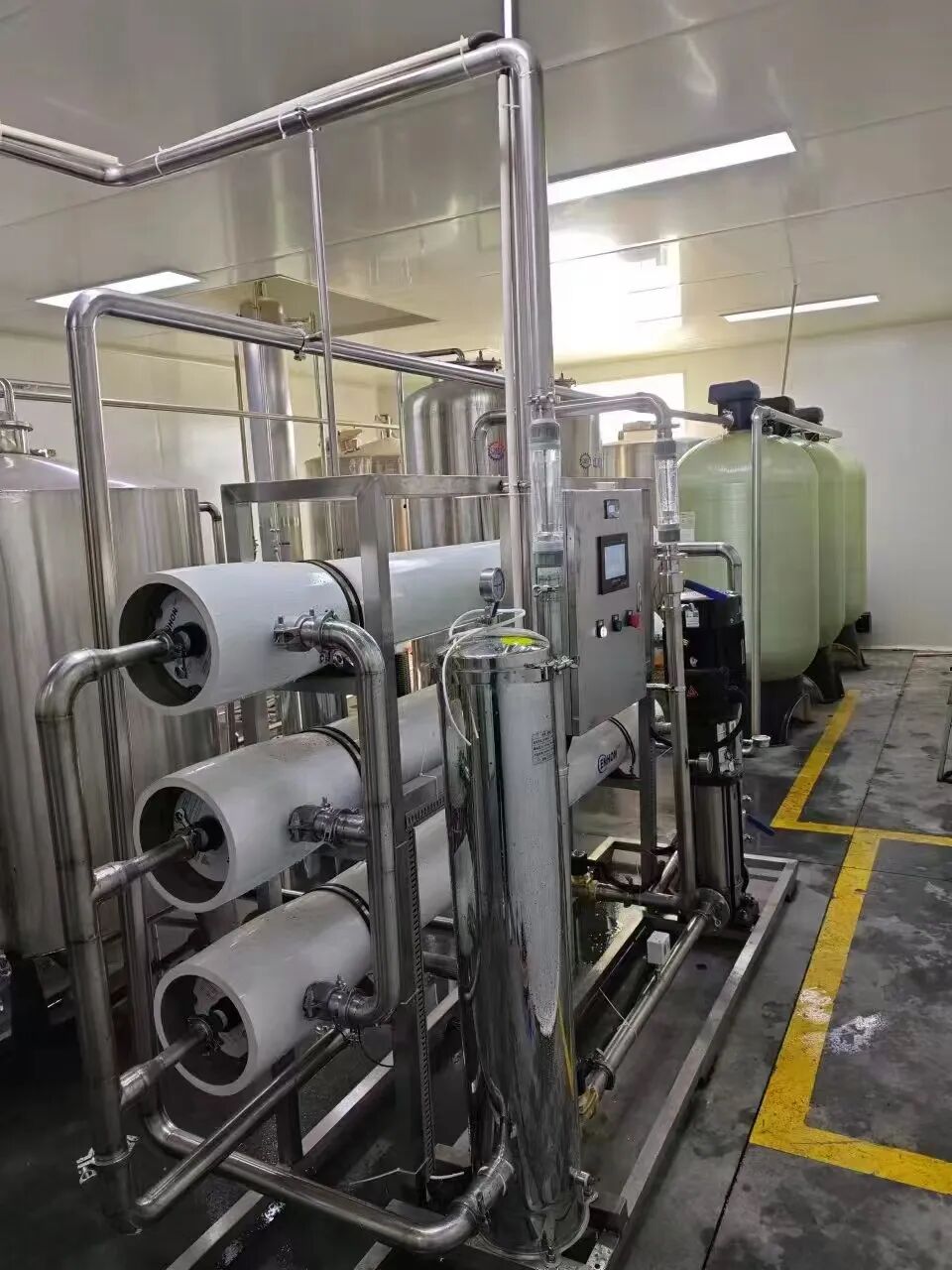
High-pressure pump, manual/electric valves for pump inlet and outlet, high/low pressure protection switches, inlet flow meter, permeate flow meter, concentrate flow meter, permeate conductivity meter, membrane assemblies (pressure vessels + RO membrane elements), electric concentrate regulating valve, concentrate shut-off valve, inlet pressure gauge, inter-stage pressure gauge, concentrate pressure gauge, permeate pressure gauge, RO frame, electric control cabinet, sampling panel, rupture disc, as well as supporting pipes, clamps, elbows and other fittings.
III. Professional Q&A on Complete Electrodialysis System
10. Advantages and Disadvantages of Electrodialysis Process
Advantages
·Low energy consumption during operation and small floor space occupation;
·Simple automatic operation with low running noise;
·No phase change throughout the desalination process, stable product water quality;
·Low chemical dosage and minor environmental pollution;
·Wide applicable inlet salinity range: 200 ~ 40000 mg/L.
Disadvantages
·Complicated overall installation procedures;
·Limited single-pass desalination rate, with an overall desalination efficiency of approximately 75%;
·Relatively low water recovery rate, around 50% under standard working conditions.
11. Mainstream Brands and Performance Requirements of Heterogeneous Anion & Cation Ion Exchange Membranes
Mainstream Brands
Shuanghua-brand heterogeneous membranes from Shanghai Chemical Plant, Lin’an heterogeneous ion exchange membranes, Shunyi (Beijing) heterogeneous ion exchange membranes.
Six Essential Properties of Qualified Heterogeneous Membranes
·High permselectivity: Core performance indicator that directly determines current efficiency and desalination effect. Permselectivity of qualified membranes shall exceed 85%.
·Low membrane resistance: A single unit can contain hundreds of membrane pairs, and membrane resistance accounts for a large proportion of total system resistance. Low membrane resistance reduces operating voltage and improves current efficiency.
·Excellent chemical stability: High ion concentration in concentrate compartments during operation, concentration polarization changes pH value on both sides of membranes, and electrolysis of electrode water generates strongly oxidizing substances such as chlorine and oxygen. Acid, alkali and oxidation resistance greatly extend membrane service life.
·High mechanical strength and dimensional stability: Resist water pressure and avoid deformation or cracking.
·Low ion diffusion rate: Reduce cross-permeation between fresh water and concentrate to guarantee desalination efficiency.
·Excellent removal performance for strong electrolytes.
12. Electrode Materials, Standard Specifications, Advantages & Disadvantages of Electrodialysis
Common Electrode Materials
Titanium-platinum coated electrodes, titanium-ruthenium coated electrodes, graphite electrodes, stainless steel electrodes.
Standard Engineering Electrode Sizes
800×1600 mm, 400×1600 mm, 400×800 mm, 340×640 mm. Sizes are selected to match the frame of electrodialysis main unit.
13. Distinction Methods of Dilute Compartment, Concentrate Compartment and Electrode Water Compartment
One cation membrane + one set of spacer + one anion membrane forms a membrane pair. The interlayer between anion and cation membranes serves as water flow channels. Three types of compartments are divided by electric field and membrane permselectivity:
Dilute compartment: Cations and anions in raw water pass through corresponding ion-selective membranes under electric field, leaving the compartment. Salinity decreases and fresh water is formed.
Concentrate compartment: Cations and anions from external water flow permeate through membranes into this compartment, continuously enriching salinity to form concentrate.
Electrode water compartment: Independent flow cavity between electrodes and ion membranes/spacers, used to discharge oxidizing water produced by electrode electrolysis.
14. Complete Composition of Electrodialysis System and Function of Each Component
Full System Components
Anion exchange membranes, cation exchange membranes, spacers, electrodes, overall clamping devices, sealing rubber sheets, online acid cleaning system, flow meters, pressure gauges, ABS pipes and fittings, valves, thyristor rectifier control cabinet.
Core Desalination Unit
Anion and cation membranes separate salt by ion permselectivity, dividing the fluid into three streams: dilute water, concentrate and electrode water.
15. Complete Desalination Principle of Electrodialysis
Anion and cation exchange membranes feature unidirectional ion permselectivity. After raw water enters the membrane stack compartments, cations and anions migrate directionally driven by DC electric field.
Cations can only pass through cation membranes while anions can only pass through anion membranes. Ions continuously accumulate in corresponding concentrate compartments, and the remaining low-ion-concentration water is fresh water, thus completing the desalination process.