The key to Reverse Osmosis (RO) system design lies in selecting the correct model and specification of RO membranes.
Proper selection ensures stable and efficient system operation, compliant permeate water quality,
and controllable energy consumption.
Improper selection will cause membrane degradation, system malfunctions,
and higher operation & maintenance costs.
Many practitioners feel confused about membrane selection. In fact,
you only need to focus on two core factors: feed water quality and permeate water flow rate.
Mastering the selection logic enables precise matching.
Keep this highly practical guide for future reference.
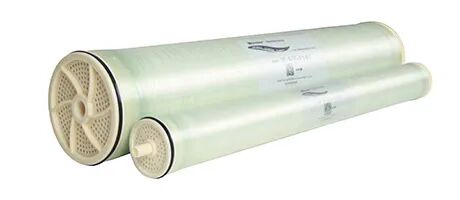
Select the Right Membrane Element Model According to Feed Water Quality
Feed water quality is the core prerequisite for membrane selection,
with Total Dissolved Solids (TDS) being the most critical indicator.
The higher the TDS value, the more complex the water quality,
and the higher the requirements for the fouling resistance and high‑pressure resistance of membrane elements.
Different TDS ranges correspond to different types of membrane elements.
The specific selection is as follows:
1.Ultra‑low Pressure Membrane Elements
Application Scenarios:
Feed water TDS ≤ 1000 ppm (relatively pure water, such as tap water and shallow groundwater)
Advantages:
Low operating pressure and low energy consumption.
Suitable for high‑quality water conditions with high cost‑performance,
meeting conventional pure water requirements.
2.Fouling‑resistant Membrane Elements
Application Scenarios:
1000 ppm ≤ TDS ≤ 3000 ppm (moderately polluted water,
such as partial surface water and lightly polluted industrial wastewater)
Advantages: Specially designed anti‑fouling coating on the membrane surface effectively resists contamination from organic matter, colloids, microorganisms, etc., extending membrane service life and reducing cleaning frequency.
3.Brackish Water Desalination Membrane Elements
Application Scenarios: TDS ≥ 3000 ppm (saline water, such as deep groundwater and brackish water)
Advantages: High pressure resistance and high salt rejection rate.
It can efficiently remove high‑concentration salts in water,
suitable for brackish water desalination,
and the produced water can meet drinking water or industrial water standards.
4.Seawater Desalination Membrane Elements
Application Scenarios: TDS ≥ 5000 ppm (high‑salinity water,
such as seawater and high‑concentration industrial wastewater)
Advantages: Extremely high pressure resistance with a salt rejection rate of over 99.5%.
Specially used for seawater desalination or high‑salinity wastewater treatment,
converting high‑salinity water into qualified fresh water.
Select the Right Membrane Element Size (Large / Small Element) Based on Permeate Flow Rate
After confirming the membrane model,
select membrane elements of appropriate specifications (common specifications: 4040 and 8040) according to the water production capacity required by the system.
The core differences between the two lie in permeate flow rate and floor space.
The specific selection logic is as follows:
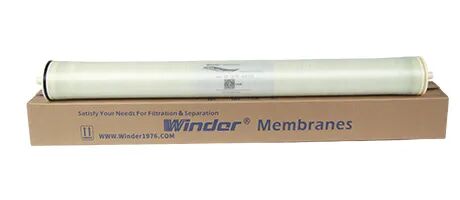
1.4040 Membrane Element (Small‑size Element)
Application Scenarios: RO systems with a permeate flow rate less than 4 T/H (small‑scale equipment,
such as laboratory units, small workshops, large household pure water machines)
Selection Reference (under normal working conditions):
· 0.25 T/H RO system: 1 piece of 4040 membrane element
· 0.5 T/H RO system: 2 pieces of 4040 membrane elements
· 1 T/H RO system: 4 pieces of 4040 membrane elements
· And so on; increase the number of membrane elements proportionally according to the required permeate flow rate.
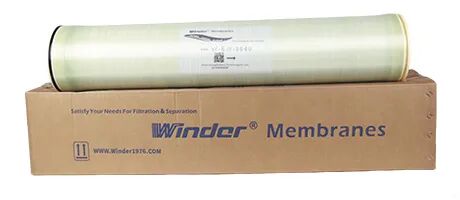
2. 8040 Membrane Element (Large‑size Element)
Application Scenarios: RO systems with a permeate flow rate of ≥4 T/H (large‑scale equipment,
such as factory production lines, sewage treatment plants and large‑scale pure water stations)
Selection Reference (under normal working conditions):
A single 8040 membrane element delivers a permeate flow rate of approximately 1 ton per hour. Therefore:
· 4 T/H RO system: 4 pieces of 8040 membrane elements
· 5 T/H RO system: 5 pieces of 8040 membrane elements
· Subsequently, increase the number of membrane elements corresponding to the actual water production capacity.
Selection Summary
Complicated calculations are unnecessary for RO membrane selection.
Just keep the core logic in mind:
determine the membrane model by feed water quality (TDS value),
then confirm the membrane size by water production capacity.
In short, select low‑pressure membranes for lower TDS values (purer water quality);
opt for fouling‑resistant, brackish‑water or seawater membranes for higher TDS values (more complex water quality).
Choose 4040 small‑size elements for low water production capacity and 8040 large‑size elements for high water production capacity,
with proportional matching. This method ensures stable system operation and compliant permeate water quality,
avoids membrane waste and reduces operation & maintenance costs.