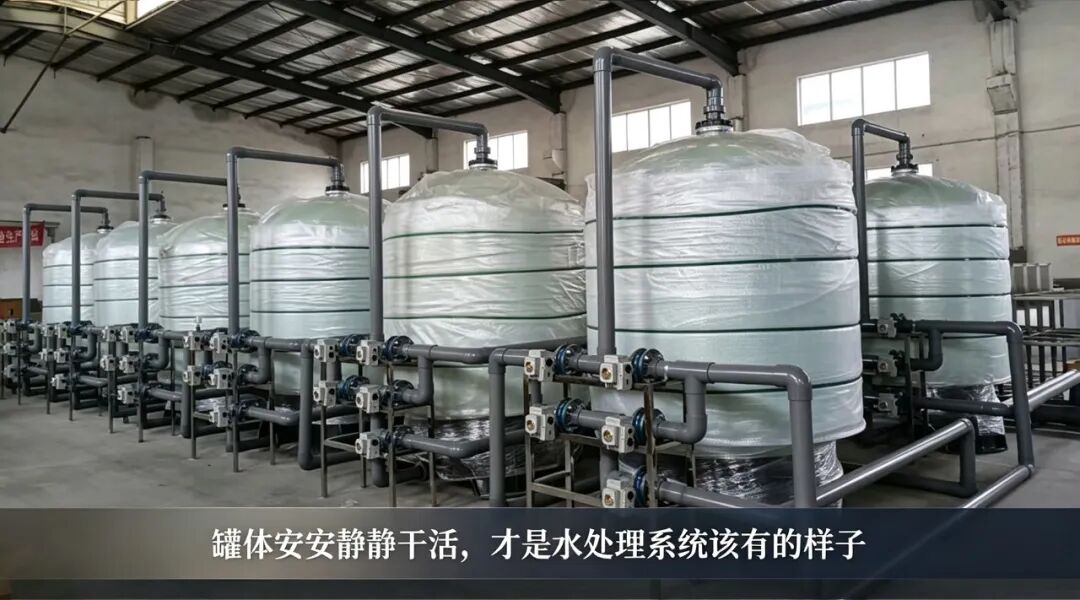
The longer we work in the water‑treatment industry, the clearer one truth becomes: customers never simply buy a fiberglass tank — they buy peace of mind.
Take Engineer Zhang from a boiler room. His carbon‑steel softening tanks had only been in service for three years when rust started flaking off the tank walls. Every time he topped up water and increased pressure, he was on tenterhooks.
Director Liu of the water‑purification workshop faced an even bigger headache. Impurities leached from the corroded inner walls of his filter tanks caused unstable outlet‑water quality, which triggered constant complaints from end‑users.
Scenarios like these repeat daily at water‑treatment sites everywhere.
At its core, the big problem with conventional tanks boils down to three words: too much hassle.
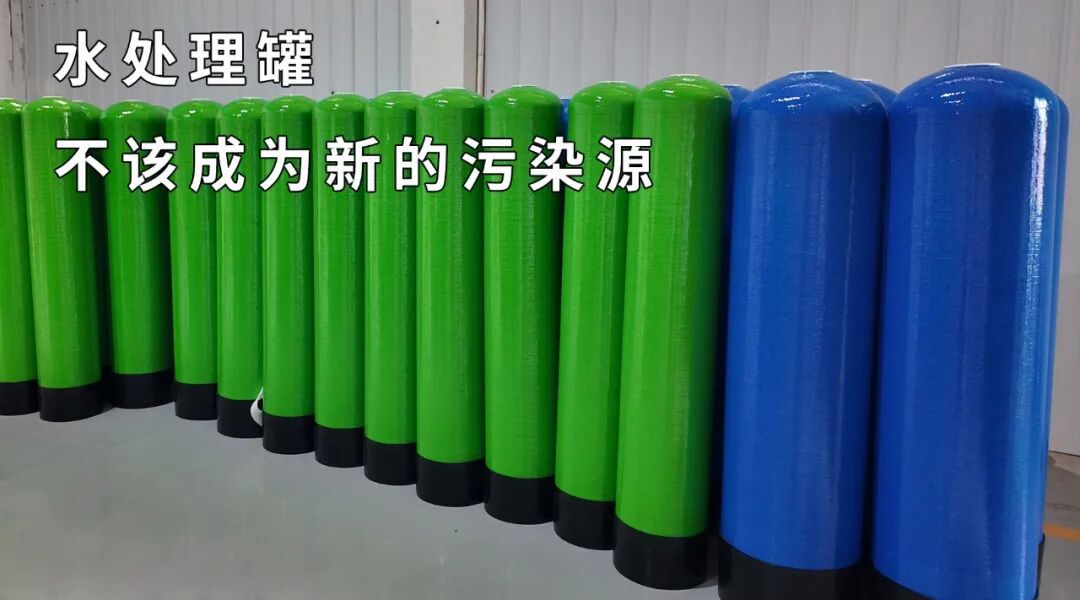
Corrosion is the last problem a water‑treatment system should have.
A water‑treatment system is designed to purify water. Yet if the tank itself corrodes, it becomes a new source of pollution.
For metal tanks exposed to softened brine and acid‑base backwash liquids, no matter how thick the anti‑corrosion coating is, pinholes and scratches are inevitable.
Once the medium seeps through, a chain reaction kicks in: tank wall rusting, resin fouling, and secondary contamination of treated water.
Our solution is to take a fundamentally different approach — we adopt food‑grade HDPE as the inner liner directly.
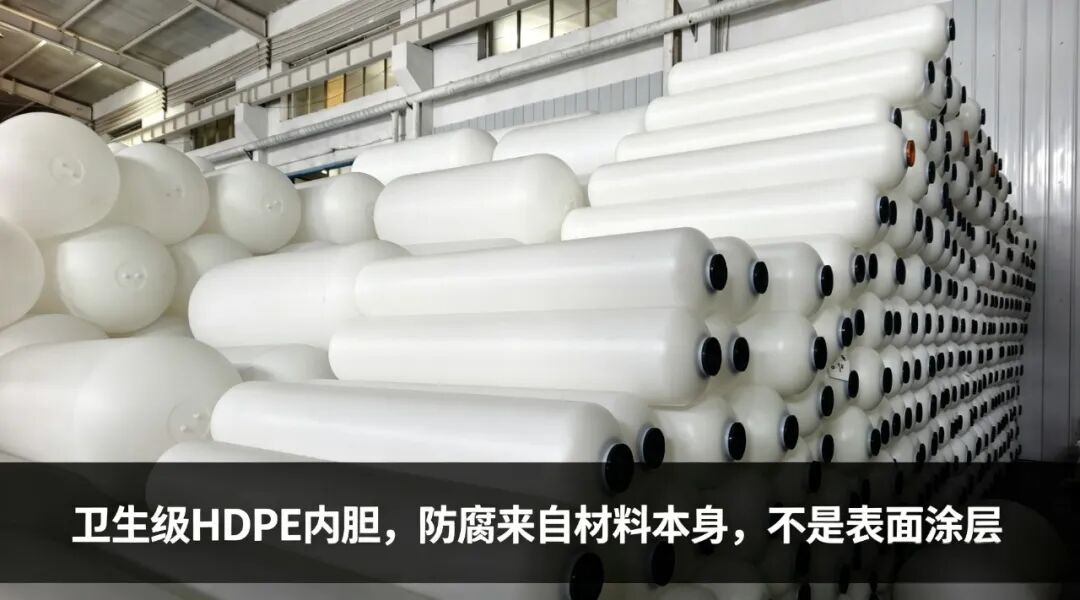
It is not a coating that protects the tank. Instead, the layer in direct contact with water and media is made of high‑density polyethylene itself.
Boasting excellent chemical stability, it resists brine, acids, alkalis and sodium hypochlorite cleaning solutions.
It will never rust, leach metal ions, contaminate resin or compromise effluent water quality.
The outer shell is wound and reinforced with epoxy resin and glass fiber to form a structural layer that bears working pressure.
The inner liner ensures corrosion resistance and water purity, while the outer layer takes pressure load. Each part performs its own function without compromise.
As a lead drafter of the national standard for composite tanks for water‑treatment equipment (FRP water‑treatment tanks), this is the principle we always uphold:
Corrosion protection for water‑treatment tanks cannot rely on superficial treatment.
Temperature, pressure and fatigue leave no room for "good‑enough".
Working conditions for softening tanks and filter tanks are far harsher than ordinary storage tanks.
Softening tanks undergo repeated pressure fluctuations during brine regeneration, forward washing and backwashing.
Filter tanks are subject to instantaneous differential‑pressure changes in backwash cycles.
Every joint and threaded connection on the tank is put to the test over and over again.
We do not leave reliability to chance.
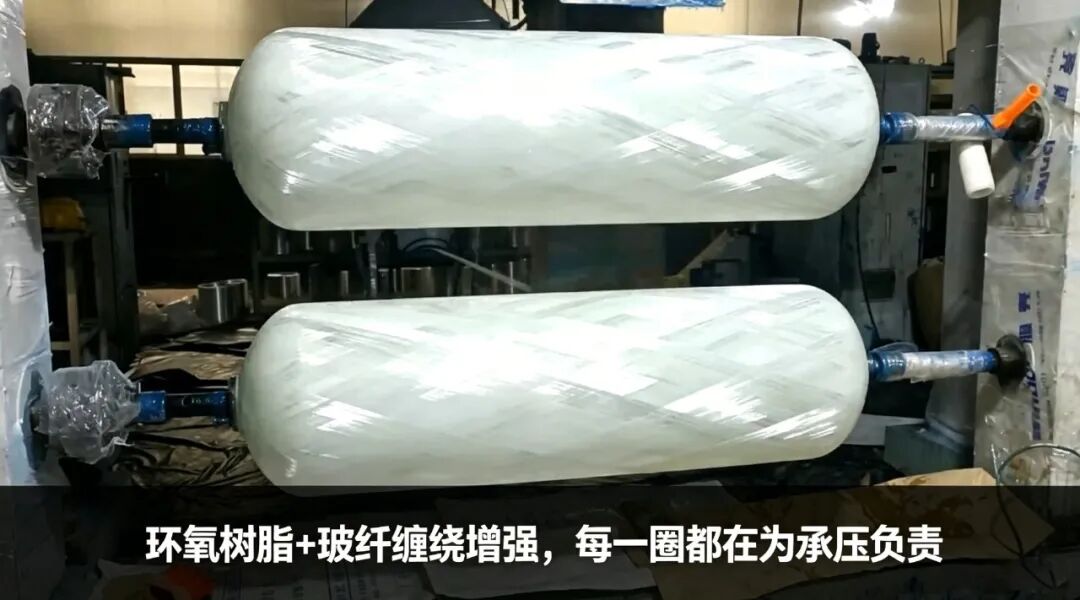
Each tank is rated for a working pressure of 125 PSI, with an outgoing test pressure of 150 PSI.
The fatigue‑cycle test exceeds 240,000 times, and the burst pressure is more than 4 times the working pressure.
These figures are not marketing slogans. They are mandatory test requirements that every tank must pass before leaving the production line.
The operating temperature ranges from 1°C to 49°C. The tank runs stably within the safe range for normal‑temperature softening as well as medium‑temperature filtration applications.
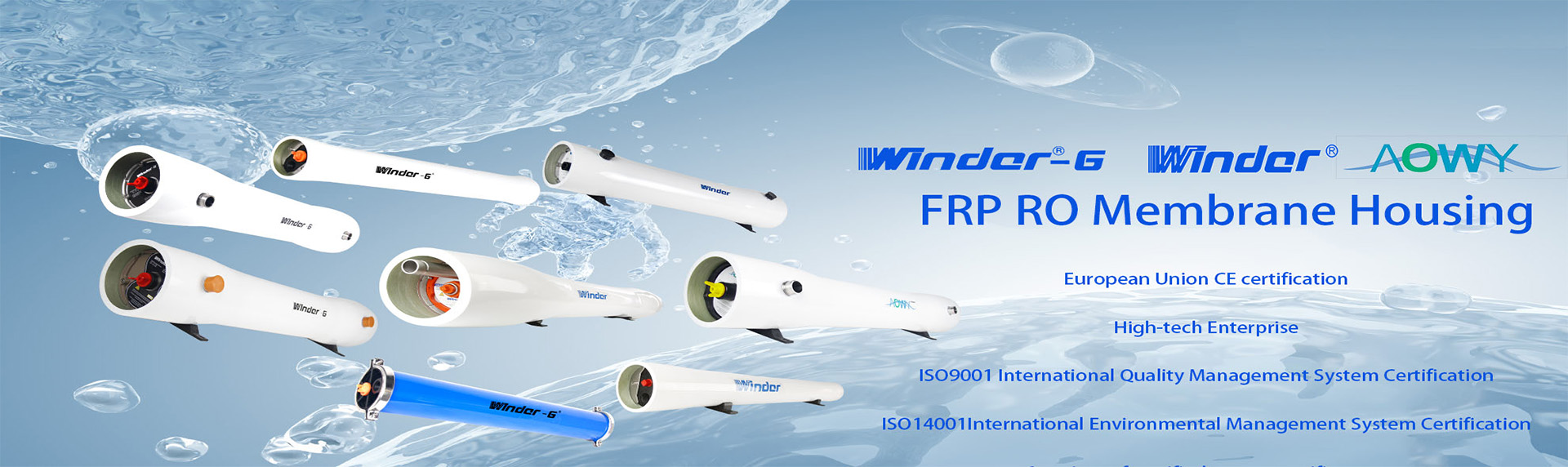
Our products are NSF‑certified and CE‑certified.
Meanwhile, our company holds the China Customs Advanced Authorized Economic Operator (AEO) certificate, ISO9001 Quality Management System Certification and ISO14001 Environmental Management System Certification.
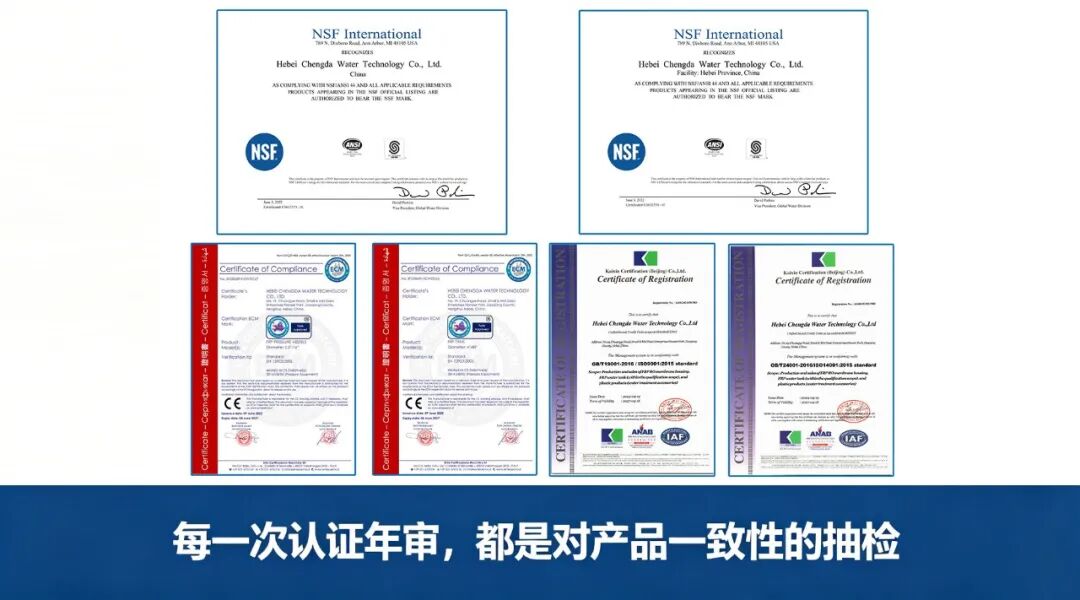
We are not listing these qualifications for show.
There is one key point you need to understand: every annual audit for these certifications includes random inspections on product consistency.
Ports and Sizes — Mismatches Are the Biggest Headache in Water‑Treatment Projects
Tank‑pipeline connections may seem trivial in water‑treatment engineering, yet any defect can lead to serious failures.
Softening tanks connect to multiport valves, filter tanks work with water distributors, and industrial systems link to flanged pipelines.
Mismatched thread specifications can at minimum cause water leakage, and in severe cases trigger system pressure imbalance.
For this reason, our port specifications fall clearly into three categories: industrial threads, residential threads and flange connections.
‑ Industrial threads: compatible with multiport valves, high‑pressure pipelines and frequent regeneration cycles
‑ Residential threads: designed for household water softeners and small water‑purification units for easy installation
‑ Flange connections: for high‑flow industrial systems, featuring reliable sealing and easy assembly & disassembly
Available sizes range from 5‑inch to 80‑inch, covering tank diameters from 130 mm to 2000 mm.
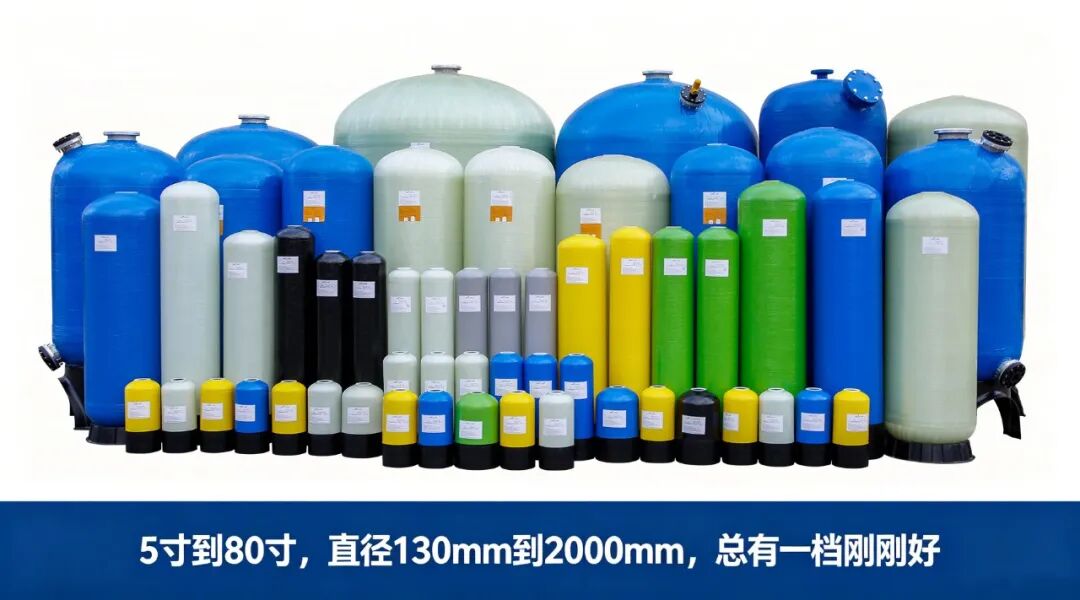
Whether you manufacture household water softeners or industrial filtration systems with a flow rate of hundreds of tons per hour, we have a suitable model for your application.
We provide a full range of compatible multiport‑valve port sizes and keep sufficient stock of standard specifications to guarantee project delivery schedules.
Lightweight means cost savings for water‑treatment projects.
Water‑treatment equipment is often installed on rooftops, in machine rooms or inside containers, where space and load‑bearing capacity are limited.
For the same volume, composite FRP tanks weigh only one‑third to one‑quarter of carbon‑steel tanks.
This cuts foundation costs, simplifies handling and installation, and reduces load pressure on floor slabs.
Moreover, softening and filter tanks are frequently arranged in parallel.
Lower tank weight also brings down the overall cost of the skid‑mounted base.
We make the tank adapt to your site, instead of modifying the site for the tank.