Many customers think the water will reach standard right after replacing the resin. However, we often run into on‑site problems: hardness still cannot be reduced, conductivity stays high, and even the outlet water has color right after the new resin is installed.
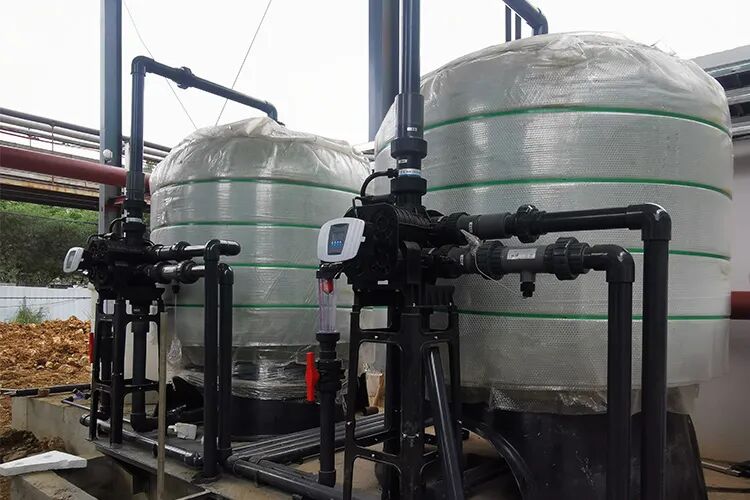
Very often, the problem is not caused by the resin itself, but lies in the following aspects:
1. Poor‑quality resin
It is not unusual to see resin prices differ by twice in the market. Low exchange capacity, insufficient cross‑linkage, uneven particle size and high breakage rate mean only a limited number of functional groups are available for ion exchange. As a result, the treated water quality becomes unstable. Low‑cost resin needs frequent replacement, which may not save money in the long run.
2. Improper regeneration
Installing new resin does not mean permanent trouble‑free operation. Regeneration is the key step. Insufficient regenerant dosage, wrong concentration, excessive flow rate and short contact time will lead to incomplete resin restoration. Water quality breakthrough will happen in the next working cycle. Many water‑quality problems root in poor regeneration.
3. Insufficient resin bed height
For the same tank, some users only fill it halfway while others load resin up to the designed height. A too‑thin resin bed cannot complete ion‑exchange fully. Once the inlet water hardness fluctuates, the outlet water will exceed standard immediately. Even premium resin cannot work well with insufficient filling volume.
4. Uneven water distribution
Poor water distributor design easily causes channeling and biased flow. Part of the resin does not take part in the ion‑exchange reaction at all, while the rest is overloaded. This greatly reduces the actual utilization efficiency of the whole system.
5. Contamination of new resin
Damaged packages during transportation, impurities brought‑in during filling, and long‑term wet storage in shutdown periods may cause microbial growth or iron contamination inside the resin bed. Cation resin suffers from iron poisoning, while anion resin is vulnerable to organic matter and oxidants. Brand‑new resin out of packages may not be clean and ready for use.
What really determines the effluent water quality is not simply the "resin" itself, but these key factors: resin quality, proper type‑selection, regeneration process, resin bed height, water distribution structure and operating parameters.
With the same softener unit, some users get failure in just half a month, while others can run stably for one full cycle or longer. All the differences lie in details.
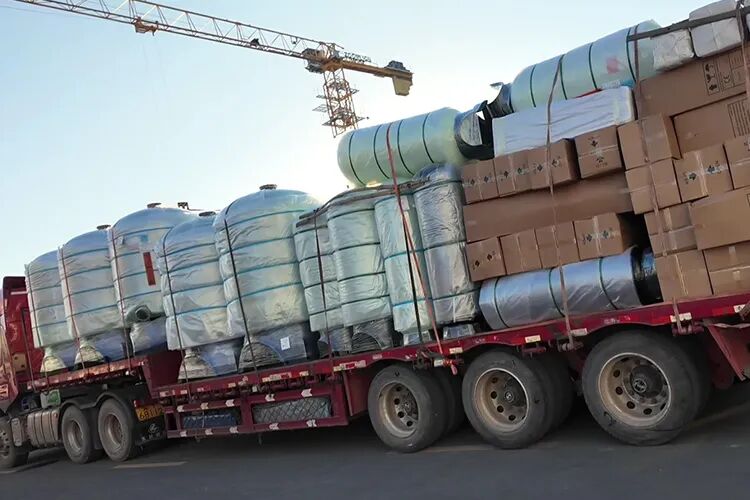
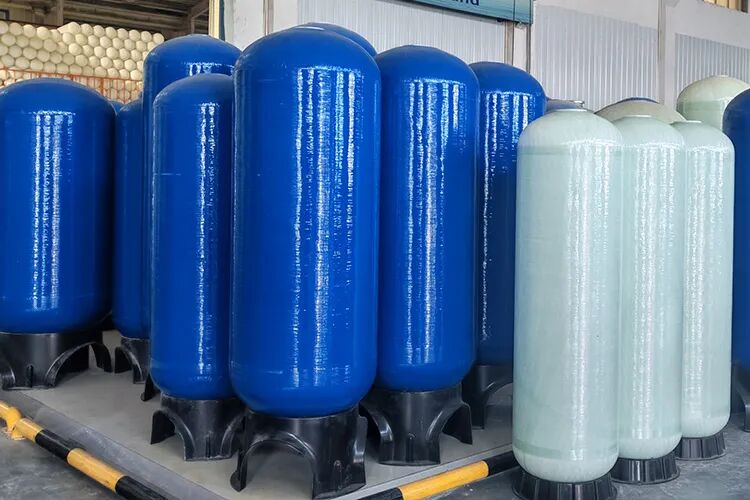
We do not only supply fiberglass filter tanks, but also pay close attention to every detail for long‑term and stable equipment operation.