In ultrapure water systems for industries including semiconductors, photovoltaics, and biopharmaceuticals, a common issue frequently arises: the effluent from upstream RO, EDI and polishing mixed beds meets the required resistivity standard, yet water quality deteriorates rapidly once the water is stored in storage tanks, which impairs the precision manufacturing processes downstream.
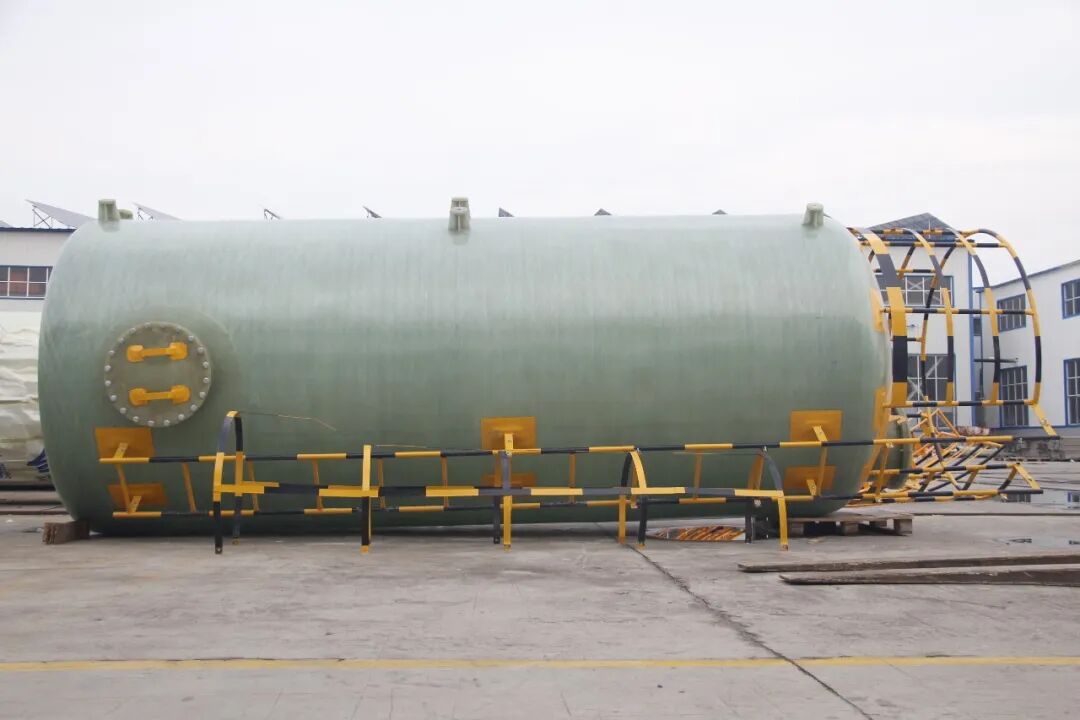
The root cause of this problem lies not in the water production equipment, but in the improper selection of water storage tanks. Ultra-high-purity ultrapure water is extremely susceptible to contamination by ambient air. Conventional water tanks fail to meet storage requirements, making nitrogen-blanketed tanks the standard equipment for ultrapure water storage. This article breaks down the working principle, functions, structure of nitrogen-blanketed tanks and key points to avoid mistakes during model selection in plain, easy-to-understand language.
Ⅰ.Why Does Ultrapure Water Degrade So Easily?
Tap water and ordinary purified water show barely any change in water quality when stored in open containers. However, ultrapure water with a resistivity of 18.2 MΩ·cm has an extremely weak buffering capacity. Carbon dioxide, suspended particulate matter and microorganisms present in ambient air will rapidly contaminate the water, so air isolation storage is mandatory.
Ⅱ.Three Core Functions of Nitrogen-Blanketed Tanks
Nitrogen-blanketed tanks are mainly used to store RO product water, EDI product water and ultrapure water polished by mixed beds. High-purity nitrogen is filled inside the tank to maintain a slight positive pressure of 0.5~3kPa and isolate water from ambient air. Its three core functions are as follows:
① Block carbon dioxide and stabilize water resistivity
The concentration of CO₂ in the atmosphere is approximately 400 ppm. Once in contact with ultrapure water, carbon dioxide dissolves to form carbonic acid, which ionizes into conductive ions. Within a few hours, the resistivity of ultrapure water will plummet from 18.2 MΩ·cm to 1~5 MΩ·cm. Moreover, carbonate ions can pass through RO membranes and EDI modules and cannot be intercepted by upstream equipment, which greatly increases the load of downstream polishing mixed beds and accelerates resin consumption. The nitrogen blanketing environment completely prevents CO₂ from dissolving into water to stabilize core water quality indicators.
② Isolate contamination from particulate matter and microorganisms
Particulate protection: Prevent airborne dust from entering the tank, avoid impurities flowing into precision processes such as wafer cleaning, and eliminate surface defects on finished products.
Microorganism control: The inert nitrogen atmosphere reduces oxygen concentration inside the tank, inhibits the reproduction of bacteria and spores, prevents biofilm formation on the inner tank wall, and avoids secondary water contamination.
③ Balance tank internal pressure to ensure equipment safety
The water level inside the tank changes dynamically: negative pressure tends to form inside the tank when water is drawn off, while air pressure rises as treated water flows into the tank. Sealed tanks without nitrogen blanketing are prone to deformation under negative pressure or rupture due to excessive internal pressure. The nitrogen blanketing system automatically supplements nitrogen and releases excess pressure to sustain stable slight positive pressure at all times, protecting both water quality and safe tank operation.
Ⅲ.Five Main Components of Nitrogen-Blanketed Tanks
The complete nitrogen blanketing system operates through five coordinated components to achieve fully automatic sealed pressure stabilization:
1.High-purity nitrogen supply source
Liquid nitrogen tanks or nitrogen generators are adopted for gas supply with nitrogen purity ≥99.99%. Equipped with a 0.1μm filter to prevent impurities in the gas source from contaminating water.
2.Pressure reducing valve
Reduces the pressure of high-pressure nitrogen to match the slight positive pressure operating conditions of the water tank.
3.Micro-pressure control valve assembly
The core control unit of the system. It monitors the tank internal pressure in real time and automatically performs nitrogen supplementation and pressure relief.
4.Breather valve with sterile hydrophobic filter
Vent excess pressure while preventing backflow of external air to realize one-way protection.
5.Interlocking liquid level gauge
Monitors water level in real time, interlocks to control the raw water inlet valve, and synchronizes signals to adjust nitrogen supply volume.
Ⅳ.Intuitive Comparison of Three Types of Water Tanks
| Tank Type | Water Quality Performance | Equipment Safety Hazards |
| Open Conventional Water Tank | Direct contact with air causes rapid water quality degradation; unsuitable for ultrapure water storage | No pressure risk, yet completely fails to meet process requirements |
| Simple Sealed Tank | Residual oxygen inside the tank continuously breeds microorganisms, leading to gradual water quality deterioration | Water level fluctuations generate positive and negative pressure, which may dent or crack the tank body |
| Nitrogen-Blanketed Sealed Tank | Isolates external contamination and maintains stable, compliant resistivity long-term | Automatic pressure regulation, zero safety risks, stable operation |
For water quality control in ultrapure water systems, focus should not only be placed on the upstream water production process; the water storage stage is equally critical.
The core working principle of nitrogen-blanketed tanks relies on an inert nitrogen atmosphere combined with physical airtight isolation to cut off contact between ultrapure water and ambient air, particulate contaminants and microorganisms, thus maintaining stable water quality from water generation all the way to end-point usage.
Nitrogen-blanketed tanks are indispensable auxiliary equipment for ultrapure water systems serving high-precision and cutting-edge industries.