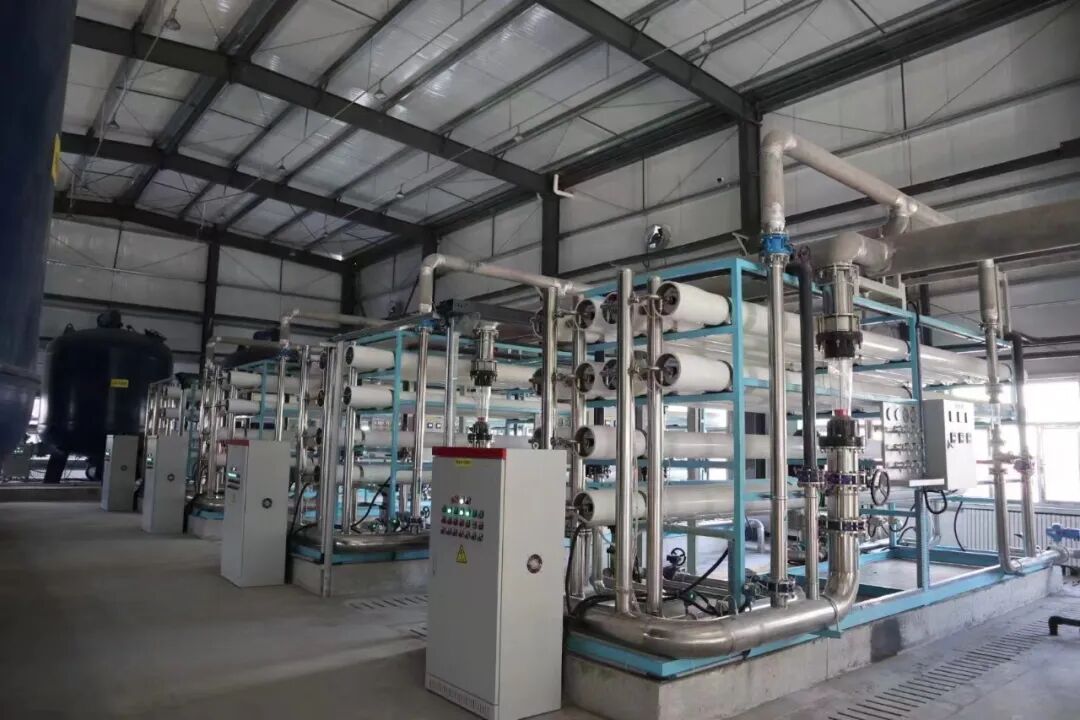
Reverse Osmosis (RO) technology is the core of water treatment.
However, RO membranes are prone to scaling and failure caused by deposition of ions such as calcium and magnesium.
Scientific dosing of antiscalant can extend membrane service life and improve water purification efficiency.
This guide will teach you how to accurately calculate the dosage from basic principles to practical operation.
I. First Understand: What Does Antiscalant Prevent?
Through complexation, dispersion and solubilization,
antiscalant inhibits crystallization and scaling of inorganic salt ions like calcium and magnesium on the membrane surface, preventing blockage and failure of membrane pores.
Compared with traditional acid addition for scale prevention, it has two major advantages:
·No acid dosing required, avoiding corrosion of equipment and pipelines and reducing maintenance costs;
·Broad‑spectrum compatibility, suitable for various water qualities and RO membranes including TFC membranes and CA membranes.
II. Core Focus: How to Calculate Dosage? (Formula + Examples)
A clear formula is available for antiscalant dosage.
Accurate calculation can be achieved by identifying three key parameters, eliminating blind dosing.
1. Core Calculation Formula (Must‑Know)
Monthly dosage formula applicable to most industrial and commercial RO systems:
Monthly Dosage (kg) = Inlet Flow Rate (m³/h) × Dosing Concentration (ppm) × Daily Operating Hours (h/day) × Days ÷ 1000
·Inlet Flow Rate (Q): Generally 1.3–1.5 times the permeate flow rate (e.g., 100 m³/h inlet flow for 75 m³/h permeate flow);
·Dosing Concentration (S): Normally 3–8 ppm (3–8 grams per ton of water), adjustable according to water quality;
·Operating Hours (H): Actual daily working hours of the equipment (e.g., 24‑hour continuous operation).
2. Practical Example
Assume an RO system: permeate flow 85 m³/h → inlet flow 115 m³/h, dosing concentration 4 ppm,
24‑hour daily operation, 30 days per month.
Calculation: Monthly Dosage = 115 × 4 × 24 × 30 ÷ 1000 = 331.2 kg
3. Short‑Term Dosage Calculation
Weekly/daily dosage can be calculated by adjusting the number of days:
·Weekly Dosage = Monthly Dosage ÷ 4 (approx. 82.8 kg in the above case);
·Daily Dosage = Monthly Dosage ÷ 30 (11.04 kg in the above case).
III. Practical Operation Guide: Dosing Method & Precautions
Accurate dosage calculation must be followed by proper dosing to ensure performance and avoid equipment damage and membrane fouling.
1. Dosing Point
Antiscalant shall be dosed continuously via a metering pump before the security filter (precision filter) to ensure thorough mixing with inlet water.
2. Chemical Preparation
Stock solution can be used directly or diluted by no more than 10 times (concentration ≥ 10%) to avoid chemical failure.
Example: 30 kg stock solution + 150 kg RO permeate water, diluted 6 times, sufficient for 5–7 days’ use.
Note: Prepare chemicals every 5–7 days.
Dilution shall use RO permeate water / deionized water to avoid impurity introduction.
3. Metering Pump Adjustment
Adjustment formula:
Dosing per Minute (g) = Inlet Flow Rate (m³/h) × Dosing Concentration (ppm) ÷ 60
Examples:
Inlet flow 2.5 m³/h, dosing concentration 2 ppm,5 g stock solution required per hour.
With diluted concentration 20 g/L, set metering pump flow rate to 0.25 L/h.
Inlet flow 3.5 m³/h, dosing concentration 2 ppm,7 g stock solution required per hour.
With diluted concentration 20 g/L, set metering pump flow rate to 0.35 L/h.
IV. Key Reminders: Three Factors Affecting Antiscalant Dosage
After calculation with the formula,
the dosage shall be dynamically adjusted according to the following factors to guarantee effective scale inhibition:
·Water quality characteristics:
Higher dosing concentration is required for water with high hardness and high silicon content.
·Operating parameters:
Higher water recovery rate and water temperature increase scaling risk,
requiring higher antiscalant dosage.
·Chemical agent type:
Recommended concentrations vary among different brands of antiscalants;
please refer to the manufacturer’s specifications.
V. Pitfall‑Avoidance Guide: Common Mistakes & Optimization Suggestions
1.Common mistake: Blindly increasing dosing concentration
Over‑dosing wastes chemicals and contaminates RO membranes.
Surveys show that around 41% of systems suffer from over‑dosing, with an average overdose rate of 23%.
2.Optimization suggestions
·Regularly test water quality and adjust dosage according to water quality fluctuations.
·Simulate scaling risk with RO design software for precise calculation.
·For complex water quality, consult engineers for customized solutions based on water quality reports.
The core of antiscalant dosing lies in accurate calculation and proper application.
Mastering the above content can effectively extend membrane service life and reduce operational costs.