In industrial and commercial settings, hard water commonly causes scaling, pipe blockages,
higher energy consumption and shortened service life of equipment.
Featuring unattended operation, stable performance and cost-effectiveness,
fully automatic water softeners have become essential water treatment facilities.
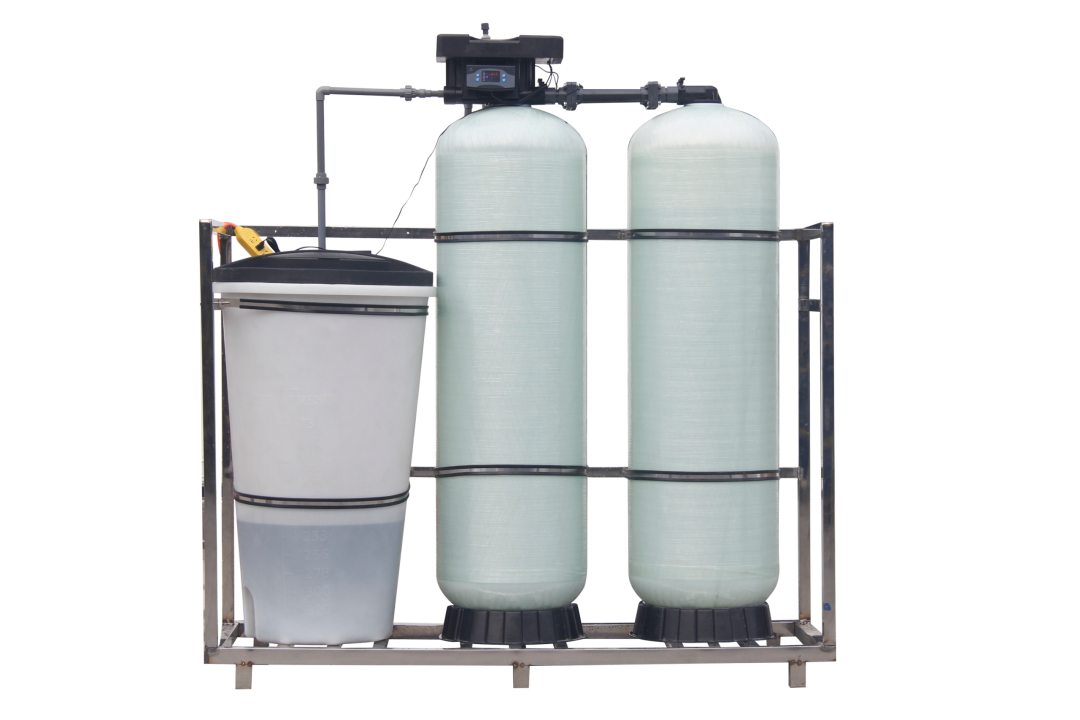
This article elaborates on its five core selection features to help you fully understand the equipment's performance advantages:
1. Compact Structure, Flexible & Easy Installation
Adopting an integrated and compact design,
the equipment occupies a small floor area and requires no special foundation.
Installation can be done simply on level ground.
It allows flexible layout to fit narrow equipment rooms and effectively cuts down site costs.
2. Corrosion & Fouling Resistance, Longer Service Life
The unit is equipped with FRP tanks and engineering plastic pipe fittings.
Featuring high structural strength and excellent corrosion resistance,
it fundamentally prevents rusting, leakage and corrosion, and avoids resin contamination.
This greatly reduces breakdowns and maintenance costs, ensuring stable system operation.
3. High Efficiency & Energy Saving, Ultra-low Operating Cost
The optimized structural design maximizes the ion exchange capacity of resin for high softening efficiency.
Combined with a low-power microelectronic control system and precision ejector,
it accurately regulates salt consumption for regeneration.
Its energy and material consumption are far lower than traditional equipment,
leading to lower long-term operating costs.
4. Fully Automatic Operation, Stable Water Quality
Fitted with an imported control valve,
the equipment automatically completes the whole process including softening, backwashing,
regeneration and displacement with no manual operation required.
After commissioning,
it can supply qualified softened water 24/7 only with regular replenishment of regenerant.
It eliminates water quality fluctuations caused by manual work and delivers consistent water supply.
5. Stable & Reliable Performance, Durable Use
The core control valve is made of engineering plastic and full copper,
featuring great corrosion resistance, anti-aging property and high pressure resistance.
The integrated multi-port valve simplifies the structure and reduces potential fault points,
free from the impact of human factors and harsh environments.
Key components can last for decades with an extremely low failure rate.
Main Application Scenarios
This equipment is suitable for most commercial and industrial water treatment applications:
·Feed water softening for heating, heat supply and gas supply boilers
·Circulating water softening for central air conditioning and refrigeration units
·Domestic and production water softening for industrial plants,
commercial buildings, hotels and factory areas
Summary
To sum up, fully automatic water softeners boast five core advantages: easy installation,
corrosion resistance & durability, energy efficiency & cost savings,
full automation and stable performance.
They solve the drawbacks of traditional equipment such as high labor costs,
frequent faults and unstable water quality,
making them a cost-effective choice for industrial and commercial water softening.
When selecting models,
please choose the proper specification according to your water consumption,
site conditions and working conditions.
It ensures stable qualified water quality and effectively controls subsequent operation and maintenance costs.