
Reverse osmosis (RO) membrane elements are the "heart" of an RO system.
Their installation specifications directly determine the service life and operating performance of the equipment.
Many users suffer from problems such as high conductivity and damaged new membranes due to careless installation.
Most such damages are not covered under warranty, resulting in heavy losses.
Today, we will thoroughly explain the correct installation methods and key pitfalls to avoid for RO membrane elements,
which even beginners can easily follow.
Key Points First: Mandatory Pre‑installation Preparations
Do not rush to install the membrane elements. Completing these two steps can prevent 80% of subsequent faults:
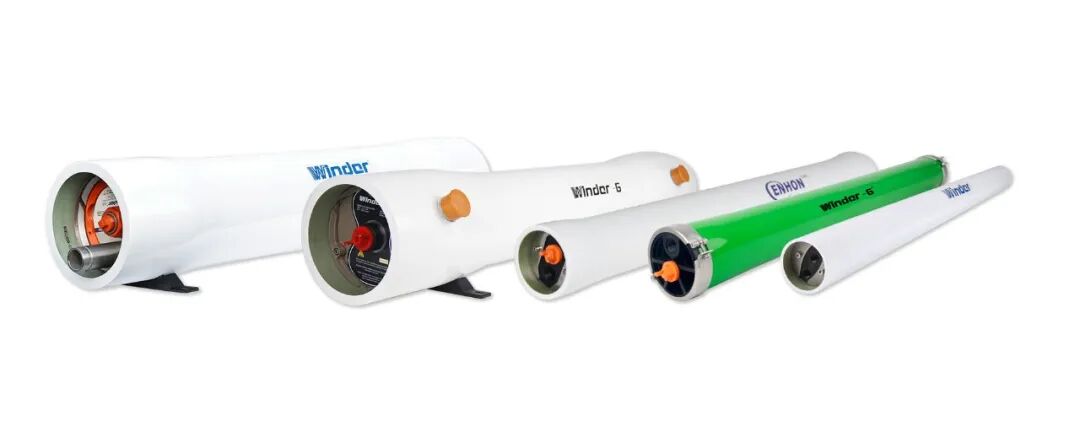
Inspect the inside of the pressure vessel to ensure it is free of impurities and oil stains.
Rinse thoroughly with clean water if any residue remains to avoid scratching the surface of membrane elements.
Check the model and appearance of membrane elements to confirm no damage or aging seals.
Keep the original protective packaging for new membranes and remove it just before installation.
Core Steps: 3 Standard Installation Procedures (No Step Can Be Skipped)
The core principles for installing reverse osmosis (RO) membrane elements are correct orientation,
proper lubrication and steady insertion.
Each step has strict requirements — never operate merely based on experience!
Step 1: Confirm the Direction and Insert Precisely
Insert the membrane element gently and steadily from the feed‑water end to the concentrate end of the pressure vessel. Avoid forced squeezing or knocking at all times to prevent membrane damage.
Important Reminder: Reverse installation will directly damage the concentrate O‑ring,
easily causing leakage, abnormal water quality or even pressure vessel cracking during operation.
If installed backwards, disassemble and reinstall immediately; do not run the system reluctantly.
Step 2: Distinguish the Two Ends Clearly
Membrane elements have two distinct ends.
Key rule: the concentrate end without black O‑rings goes into the vessel first,
followed by the feed‑water end with black O‑rings.
Many operators ignore this and install randomly, resulting in serious consequences:
insufficient tangential flow velocity during system operation, accelerated concentration polarization,
doubled membrane fouling rate, shortened service life,
greatly deteriorated permeate water quality and high conductivity.
Step 3: Use Proper Lubricant — Improper Ones Are Strictly Forbidden
To reduce friction between membrane elements and the pressure vessel and protect seals,
use the correct lubricant. Glycerin is highly recommended, as it is safe, non‑corrosive,
harmless to membrane materials and ensures smooth installation.
Critical Warning: Dishwashing liquid,
petrolatum and other oil‑based lubricants are strictly prohibited!
Dishwashing liquid, a cationic surfactant, will significantly reduce the water flux of negatively‑charged membranes and lower filtration efficiency.
Oil‑based lubricants such as petrolatum will embrittle and crack the central tube of membrane elements, leading to permanent scrappage with unnecessary heavy losses.
Post‑installation Operations: Commissioning & Inspection to Eliminate Hidden Risks
Do not start the system right after installation. Complete two inspections first:
①Shake the membrane element slightly to ensure no looseness or shifting, and seals are in place.
②Connect system pipelines and check all joints for looseness and leakage.
Then perform low‑pressure flushing at 0.1–0.2 MPa for 10–15 minutes to discharge air and residual impurities inside the pressure vessel.
Drain all initial permeate to prevent protective solution from affecting water quality.
Gradually increase pressure to the normal operating range after flushing,
monitor permeate conductivity and flow rate,
and put the system into normal operation only if no abnormalities are found.
Summary of Common Mistakes to Avoid Detours
1.Reverse installation: the most common and fatal error,
directly damaging O‑rings and worsening water quality.
Remember: insert from feed‑water end to concentrate end; the end without O‑rings goes first.
2.Improper lubricant: dishwashing liquid or petrolatum may ease installation temporarily but damage membranes long‑term.
Only glycerin is allowed.
3.Unclean pressure vessel before installation: internal impurities scratch the membrane surface,
causing fouling and water leakage.
4.Forced installation: squeezing or knocking cracks membrane end plates and shells,
resulting in non‑warrantable scrappage.
Final Reminder
RO membrane elements are precision components.
Installation allows no “rough approximation” — only standard compliance.
Proper installation avoids various faults,
extends membrane service life (normally 1–3 years of stable operation),
and reduces replacement and downtime costs.
If you are unsure about installation direction or end identification,
follow the above steps repeatedly or consult professional technicians.
Do not operate blindly.
Bookmark this guide for direct reference during future membrane installation or replacement to avoid all common pitfalls!