

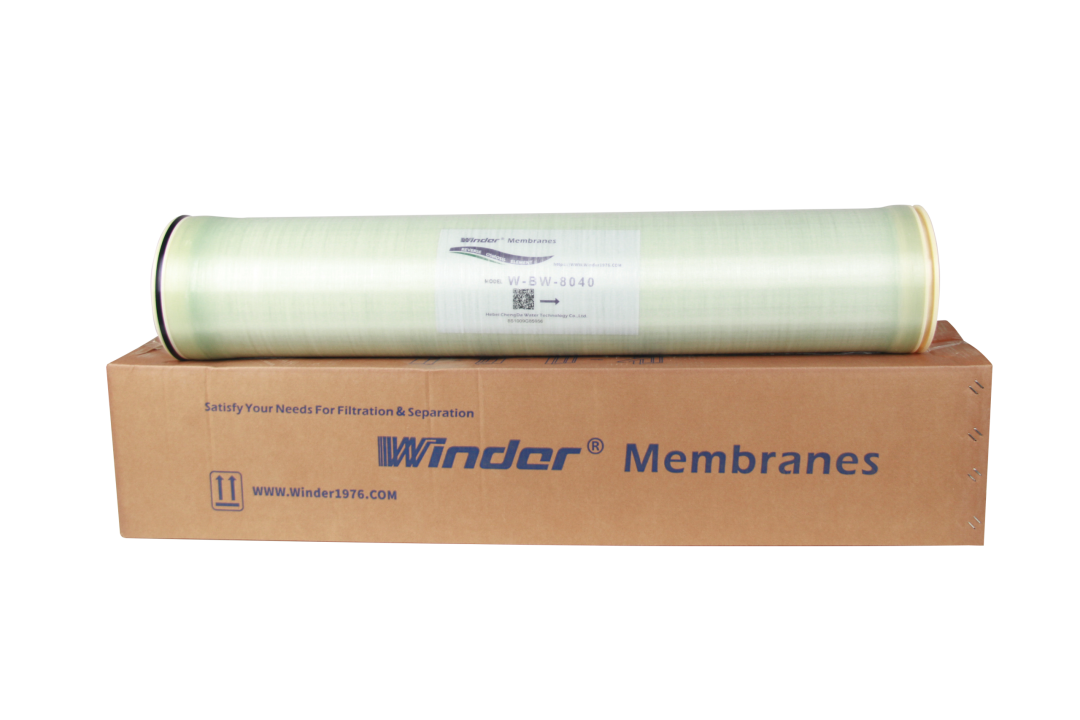
In water treatment systems, the 8040 reverse osmosis (RO) membrane serves as a core component thanks to its outstanding filtration efficiency and operational stability. As a precision filter element, however, its performance and service life heavily rely on standardized routine maintenance. Improper operation or neglected upkeep will readily trigger membrane performance degradation and damage, driving up overall system operation and maintenance costs. This article specifies key daily maintenance requirements for 8040 RO membranes and proper handling procedures for membrane elements during system shutdown.
I. Hazards of Membrane Element Drying after Equipment Shutdown
Membrane drying refers to the condition where reverse osmosis (RO) membrane elements lose moisture and become desiccated. This condition directly causes shrinkage of membrane pores and irreversible changes to internal structure, resulting in deteriorated core performances including reduced permeate flux and lowered salt rejection. In severe cases, permanent physical and chemical damage occurs to membrane elements, drastically shortening service life and raising the cost of membrane replacement for the system.
II. Key Points of Routine Maintenance
In case of prolonged shutdown, periodic maintenance is required to prevent secondary microbial contamination of membrane elements.
Operating Procedures:
1.Perform CIP (Clean-in-Place) cleaning on RO membranes to remove surface contaminants and scale deposits.
2.Flush with RO permeate water for no less than 30 minutes to eliminate residual cleaning chemicals.
3.Shut down valves and submerge membranes in RO permeate to keep them fully wet.
4.Repeat Steps 2 and 3 on a weekly basis and replace preservation water regularly to prevent water quality deterioration.
5.Key Note: Ensure clean RO permeate; strictly inhibit microbial growth inside pipelines and water tanks to avoid secondary membrane contamination.
Long-term Storage (Shutdown Period ≥ 30 Days)
For long-term shutdown, preserve membranes with bisulfite preservation solution for freeze protection, corrosion inhibition and contamination prevention.
Operating Procedures
1.Carry out CIP cleaning of RO membranes to remove surface contaminants and prevent membrane fouling.
2.Flush with RO permeate for minimum 30 minutes to fully remove residual cleaning agents.
3.Prepare 1.0% sodium bisulfite solution with RO permeate (food-grade, non-cobalt activated recommended), then circulate through RO vessels until full coverage is achieved.
4.After RO vessels are completely filled with preservation solution free of air bubbles, close all valves for airtight storage to isolate ambient air.
5.Regular solution replacement: refresh solution by repeating Steps 1–3 every 30 days below 27°C, every 15 days above 27°C to avoid solution degradation.
6.Preservation solution monitoring: maintain pH between 3.5–9.5, bisulfite concentration ≥0.1%, storage temperature ≤25°C; replace solution promptly once parameters go out of range.
7.Anti-freeze protection: when ambient temperature ≤5°C, add 30% glycerol or 20% ethylene glycol (freezing point -10°C). Replace the original preservation liquid and seal per long-term storage procedures to avoid membrane cracking from freezing.
8.System restart: flush thoroughly with clean water under low pressure and drain initial permeate. Confirm no disinfectant residue before putting the system into service.
9.Important note: Formaldehyde is prohibited for long-term storage; alcohol-based solutions are not recommended, as they may damage membrane structure and deteriorate permeate quality.
Summary of Key Points
1.Core rule: Membrane elements shall be kept wet under all preservation methods; drying is strictly forbidden.
2.Precondition: Complete membrane cleaning and contaminant removal prior to storage.
3.Key requirement: Periodic inspection and replacement of preservation solution / flushing water are mandatory for medium and long-term storage.
4.Ambient control: Implement anti-freezing measures at low temperatures; shorten solution replacement cycle under high temperatures.
5.System restart: Flush the whole system and test residual chemicals to guarantee qualified permeate.
Proper RO membrane preservation extends service life and cuts operating costs. Keep this guideline for standby reference and follow the steps directly during system shutdown.