Many enterprises often encounter problems such as reduced water output, increased operating pressure and deteriorated water quality when using reverse osmosis water purification equipment. In most cases, these issues are not caused by equipment malfunctions, but by fouling and blockage of reverse osmosis membranes from contaminants. This article sorts out and explains common contaminants on RO systems, their fouling causes and corresponding prevention measures to facilitate daily operation, maintenance and management of the equipment.
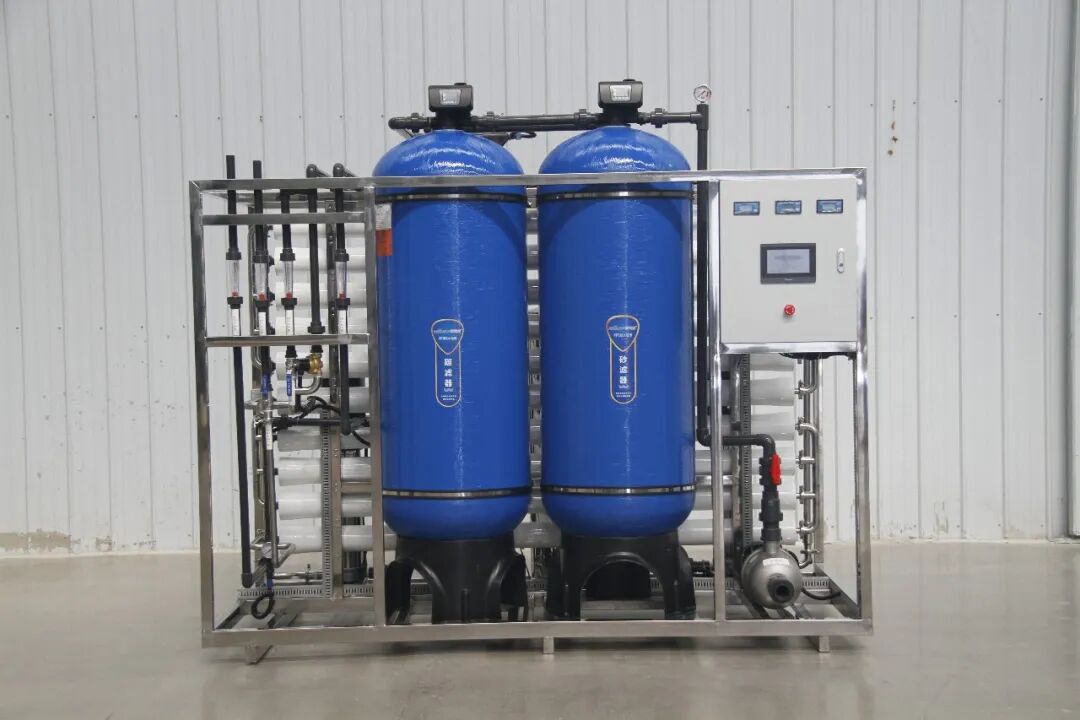
Ⅰ. Working Principle of Reverse Osmosis Equipment
You may regard the reverse osmosis membrane as an ultra-fine special filter screen with extremely tiny pores that only allow water molecules to pass through.
The equipment applies pressure to force raw water to permeate through the membrane. Impurities including salts, colloids, bacteria, organics, sediment and microorganisms in the feed water are all intercepted, leaving only pure clean water. This is the core working principle of deep water purification by reverse osmosis systems.
II. Three Root Causes of Reverse Osmosis Membrane Fouling
During daily operation, membrane fouling falls into three main categories. In most scenarios, multiple types of fouling occur simultaneously, accelerating the deterioration of membrane elements.
1. Physical Blockage (Most Common)
Solid contaminants such as sediment, metal oxides, calcium and magnesium scales keep accumulating on the membrane surface and clogging membrane pores. Simply put, excessive buildup of solid impurities blocks the filter, which is the most basic and prevalent fouling issue.
2. Chemical Adsorption
Excessive chemical substances and residual water treatment chemicals in raw water get adsorbed inside membrane pores. They alter the original filtration performance of RO membranes and gradually degrade the water purification capacity of the system.
3. Organic Adhesion (Hardest to Clean)
Various organics and biological slime firmly attach to the membrane surface and inner pores, which cannot be removed by routine cleaning. This is the primary factor leading to reduced water production and deteriorated operational performance.
In addition, the flow decline caused by membrane fouling will compound with concentration polarization, further lowering the water treatment efficiency and speeding up the aging and damage of membrane elements.
III. Four Major Types of Contaminants: Hazards & Cleaning Difficulty
1. Suspended Solids (Easiest to Treat)
Such contaminants mainly refer to sediment and fine suspended particles in water. They are relatively large in size and can settle naturally after standing, widely found in surface water and industrial wastewater.
Characteristics: They only clog the front pipelines and filter media of the system and will not cause direct damage to RO membrane elements.
Solutions: They can be effectively intercepted by the supporting multimedia filters and fine sand filters of the equipment. Combined with flocculant sedimentation process, almost all suspended solids can be removed, exerting nearly no impact on the downstream reverse osmosis system.
2. Colloidal Contaminants (Most Likely to Be Ignored)
Colloidal particles feature extremely tiny particle sizes, far smaller than suspended solids. They cannot settle naturally and remain suspended in water for a long time. They easily pass through pre-treatment filters and adhere to the surface of reverse osmosis membranes.
Common colloidal contaminants include silicates, iron and aluminum oxides, humus, etc. Long-term accumulation will cause scaling on the membrane surface, reduce the permeability of membrane pores, and gradually lower the water production capacity of the equipment.
3. Biological Contaminants (Fastest Spreading)
They mainly consist of bacteria, algae, fungi and biofilms in water, which are most common in surface water and wastewater and count as frequent fouling issues in daily equipment operation and maintenance.
Fouling process: In the early stage, only the front-end membrane elements are affected, manifested as increased operating pressure at the front and a slight rise in salt rejection rate within a short period. Afterwards, microbial colonies multiply and spread rapidly, generating biological slime on the entire membrane module.
Final consequences: Sharp rise in operating pressure, drastic drop in water yield, and unqualified treated water quality.
In accordance with industrial standards, sterilization pre-treatment must be added in advance if raw water contains excessive bacteria.
4. Organic Contaminants (Most Harmful & Hardest to Clean)
Organics are the top fouling hazard for reverse osmosis equipment. With complex compositions and unpredictable fouling risks, they are key protection targets in system design and daily operation & maintenance.
Main sources:
Natural sources: Humus formed by the decomposition of animals and plants in water
Artificial sources: Various organic impurities carried by industrial wastewater and domestic sewage
These substances have strong viscosity and firmly adsorb inside membrane pores, which cannot be completely eliminated by conventional cleaning. Worse still, certain special organics will directly corrode and degrade membrane materials, resulting in permanent damage and scrapping of membrane elements.
Per industry standards, advanced treatment processes must be equipped when raw water has excessive organic content. Most organics can be removed via flocculation and oxidation pre-treatment. Residual trace organics can be deeply treated by activated carbon filtration and ultrafiltration equipment to guarantee qualified influent water quality.
IV. Summary & Operation and Maintenance Recommendations
Conventional impurities such as sediment and suspended solids are easy to remove and can be handled by basic pre-filtration systems, so there is no need for excessive concern.
Colloidal and biological fouling are persistent and prone to spreading. Operators shall conduct regular inspections of pre-treatment equipment and carry out routine sterilization and cleaning work.
Organic fouling is highly destructive and may cause irreversible damage to membrane elements. Therefore, strict control of influent water quality at the source is mandatory.
To ensure stable operation of reverse osmosis systems and effectively extend the service life of membrane elements, the core solution lies in proper front-end pre-treatment. Targeted interception of various contaminants can prevent membrane fouling at the source and greatly cut equipment operation and maintenance costs.