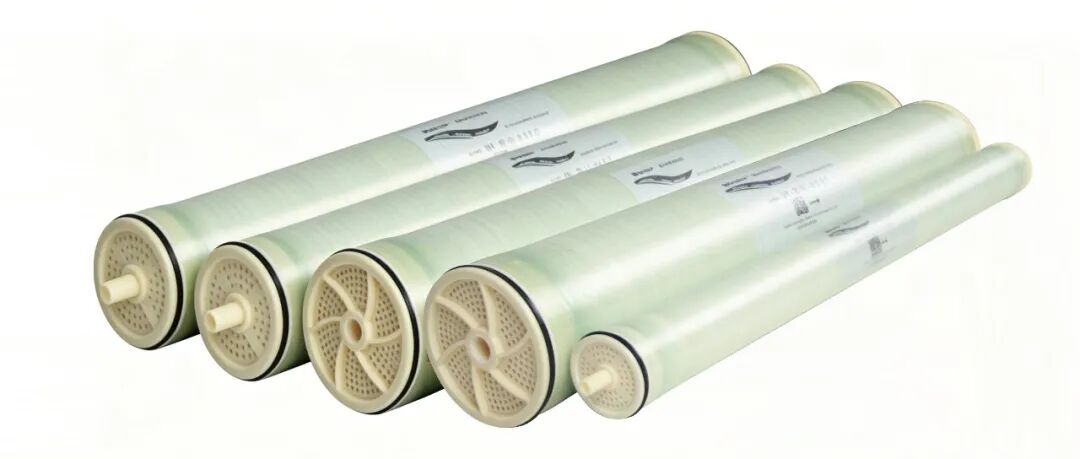
RO membranes are widely used in seawater desalination,
wastewater treatment and other fields. As the core component of water treatment systems,
they are constantly plagued by membrane fouling, which hinders their long-term stable operation.
Three major contaminants affect RO membranes during operation with definite hazards:
Inorganic deposits:
Scale formed by calcium,
magnesium and other substances clogs membrane pores and reduces water production rate.
Organic contaminants:
Microorganisms, grease and other substances form a surface film,
blocking filtration and causing bacterial growth.
Colloidal particles:
These adhere to the membrane surface and degrade filtration performance,
and may lead to irreversible membrane degradation over time.
Regular cleaning is essential for RO membrane maintenance.
The sequence of acid cleaning and alkaline cleaning directly determines the cleaning effect and membrane service life.
An improper order will result in ineffective cleaning, membrane abrasion, and even replacement of membrane elements.
Below is a complete guide to RO membrane cleaning with key points fully elaborated.
1. Acid Cleaning & Alkaline Cleaning: Clear Division of Functions
Acid cleaning and alkaline cleaning work as an ideal combination with different working principles and purposes.
✅ Acid Cleaning: Scale Removal for Inorganic Contamination
Core purpose: Remove inorganic scales such as calcium carbonate, iron oxide and silica scale on membrane surfaces.
Mechanism: Acid solutions (citric acid, nitric acid, etc.) dissolve scales or convert them into soluble substances to detach from the membrane.
Common chemicals: Citric acid, nitric acid, hydrochloric acid.
✅ Alkaline Cleaning: Contaminant Removal for Organic & Biological Fouling
Core purpose: Eliminate organic pollutants including grease and protein, as well as biological contaminants such as microorganisms and biofilms.
Mechanism: Alkaline solutions (sodium hydroxide, etc.) saponify grease and decompose organic matter, and dissolve extracellular polymeric substances of microorganisms to strip off soft fouling.
Common chemicals: Sodium hydroxide, trisodium phosphate, low-concentration sodium hypochlorite (specially for microbial contamination).
2. Core Principle: Choose Cleaning Sequence by Fouling Type
There is no universal sequence. The selection depends on the dominant contaminant type for optimal efficiency.
Scenario 1: Acid First, Then Alkali (Inorganic Scale Dominant)
If the membrane is mainly fouled by calcium-magnesium scale, iron oxide and other inorganic deposits:
Perform acid cleaning first to remove hard inorganic scale, which would otherwise block alkaline solutions and hinder subsequent removal of organic contaminants.
Follow with alkaline cleaning. With inorganic scale removed, residual organic matter and biofilms are fully exposed for thorough cleaning.
Scenario 2: Alkali First, Then Acid (Organic & Biological Fouling Dominant)
For membranes contaminated by obvious grease, microbial slime, oily wastewater or fermentation broth:
Start with alkaline cleaning to decompose organic matter and strip biofilms, paving the way for acid cleaning.
Proceed with acid cleaning. After organic fouling is eliminated, acid solutions can directly act on inorganic deposits for complete scale removal.
3. Practical Guide: Cleaning Formulas & Operational Notes
Proper cleaning sequence, correct formulas and standardized operations are essential to guarantee cleaning results. Below are 9 commonly used formulas and key precautions:
Common RO Membrane Cleaning Formulas (Targeted for Specific Fouling)
Mixture of 0.2% Sodium Hypochlorite + 0.1% Sodium Hydroxide: Remove organic and active biological fouling.
1%–2% Citric Acid Solution or 0.4% Hydrochloric Acid Solution: Eliminate blockages caused by iron deposits and carbonate crystals.
Mixture of 0.3% Hydrogen Peroxide + 0.3% Sodium Hydroxide: Clean fouling from glutamic acid fermentation broth.
0.5% Nitric Acid Aqueous Solution: Remove lead phosphate deposits generated during electrophoretic painting (use after routine cleaning).
1% Formaldehyde Solution: Remove bacterial fouling on ultrafiltration membranes.
Compound Formula (containing sodium dodecyl benzene sulfonate, sodium hydroxide, etc.): Treat fouling from oily wastewater (strict pH control required).
20% Sulfuric Acid Solution: Remove silica scale crystals.
Mixture of 3% Phosphoric Acid + 0.5% Disodium EDTA: Remove protein and grease contaminants.
Key Tips to Avoid Mistakes in Chemical Cleaning
Water for solution preparation: Use softened water or product water, free of heavy metals, residual chlorine and other oxidants.
Solution volume: 40–80 L per 8-inch membrane element; 10–20 L per 4-inch membrane element (adjust as required).
Operating pressure: 0.1–0.3 MPa, maximum 0.4 MPa to prevent membrane damage.
Flow rate: 6–9 m³/h for 8-inch pressure vessels; 1.8–2.3 m³/h for 4-inch pressure vessels.
Cleaning temperature: Optimal range 30–35°C, maximum 45°C. Cool down immediately if overheated.
Operation mode: Alternate circulation and soaking. Segmented cleaning is recommended, with soaking time ranging from 2 to 24 hours.
Cleaning duration: A minimum of 1–2 hours, adjust according to fouling severity.
4. Standard Operating Procedure
Follow the below steps strictly to protect membrane elements and ensure cleaning performance:
System shutdown & draining: Turn off the system, drain inlet water, and rinse loose surface contaminants with clean water.
Alkaline cleaning: Prepare 0.5%–1% alkaline solution at 30–40°C, circulate for 30–60 minutes, then rinse with clean water until pH is nearly neutral.
Acid cleaning: Prepare 1%–2% acid solution at 25–35°C, circulate for 30–60 minutes, then rinse with clean water until pH reaches neutral.
Final inspection: Restart the system and check water production rate, filtration performance and effluent quality to confirm full recovery.
Summary
Core Rule for RO Membrane Cleaning:
For dominant inorganic scale, perform acid cleaning first then alkaline cleaning;
for major organic and biological fouling, apply alkaline cleaning first then acid cleaning.
Adopting the right sequence and formulas helps extend membrane service life and reduce losses.
Delayed cleaning will reduce water production rate,
raise energy consumption by 20%–40% and cut membrane service life by 40%.
Regular and scientific cleaning is the most cost-effective maintenance method.